

Why does your marine GPS or high-output torch shut down when the battery indicator still shows 40% capacity? It’s a frustrating reality for many outdoor enthusiasts who rely on traditional rechargeables that suffer from significant voltage drop. At Bivo, we’ve spent 30 years testing gear in the harshest conditions. We know that inconsistent power isn't just an inconvenience; it's a performance failure. Integrating 3400 mwh rechargeable batteries into your kit ensures your high-drain devices receive the steady current they require without sudden mid-trip blackouts.
You likely agree that switching to sustainable power shouldn't mean sacrificing reliability or carrying heavy docking stations. This 2026 guide explains why these high-capacity lithium-ion cells are the superior choice for your marine and outdoor gear. You'll learn how to interpret energy density labels and why a constant 1.5V output outperforms standard 1.2V alternatives every time. We also examine how integrated USB-C charging saves space and time. This provides you with a streamlined power solution that's ready for any adventure.
Key Takeaways
- Understand the internal buck converter technology that allows these lithium-ion cells to maintain a constant 1.5V output for high-drain gear.
- Master the math behind energy ratings to accurately compare modern high-capacity cells against your existing NiMH batteries.
- Discover why 3400 mwh rechargeable batteries are 30% lighter than standard alternatives, making them ideal for marine headlamps and outdoor kits.
- Identify the critical differences between charging standards to ensure your power setup is compatible with the latest USB-C hardware.
- Leverage 30 years of industry experience to select reliable power solutions designed to perform in demanding Australian conditions.
Understanding 3400 mWh Rechargeable Battery Technology
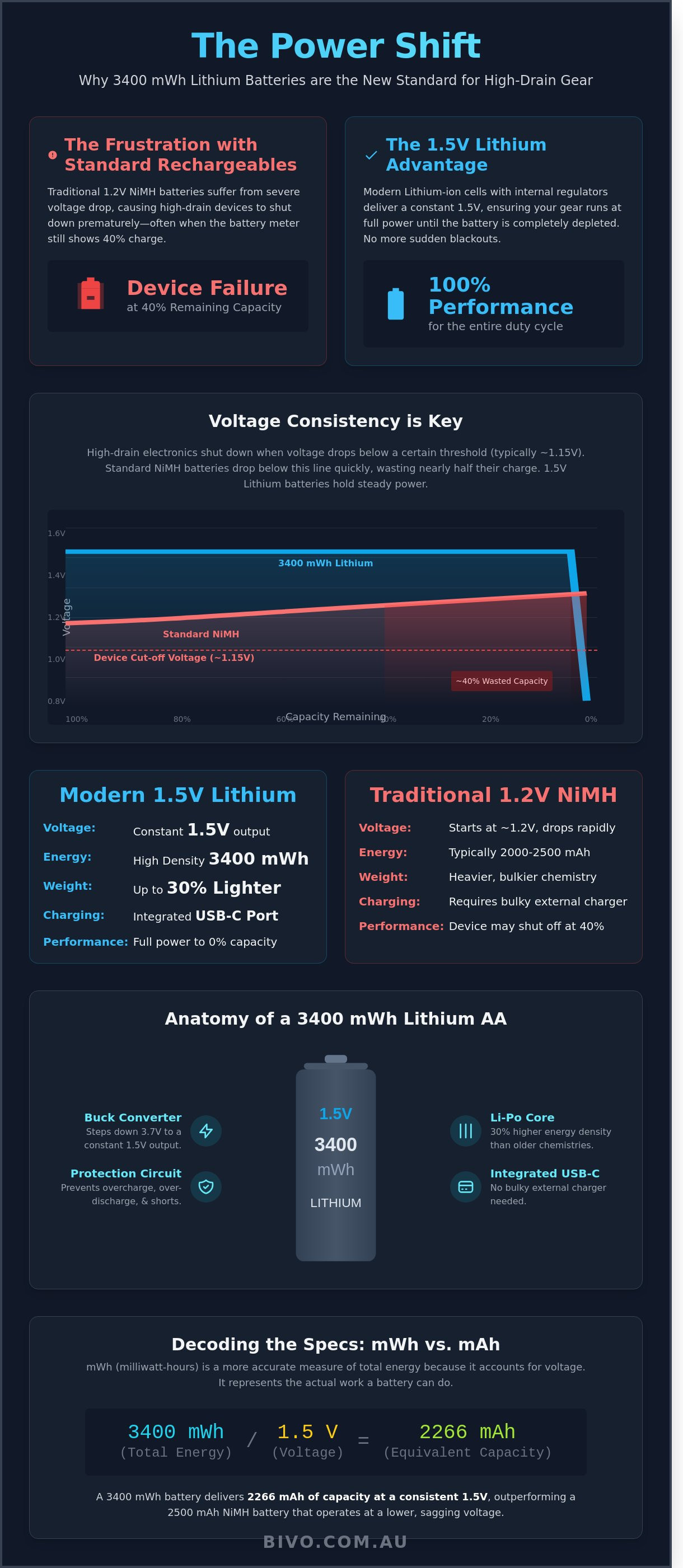
3400 mWh rechargeable batteries represent the peak of current portable power, consisting of high-capacity lithium-ion cells regulated to output a constant 1.5V. Unlike standard Nickel Metal Hydride (NiMH) cells that naturally sit at 1.2V, these lithium units utilize an internal buck converter to manage power delivery. This circuit steps down the raw 3.7V lithium chemistry to a precise 1.5V, ensuring compatibility with sensitive electronics. A milliwatt-hour (mWh) is a measure of total energy calculated by multiplying the battery voltage by its amp-hour capacity rather than just measuring charge alone.
By 2026, the shift in 3400 mwh rechargeable batteries has reached a tipping point where they have finally replaced traditional alkaline and NiMH options in professional kits. The manufacturing costs for lithium polymer have dropped by 22% since 2022, making these high-capacity cells affordable for everyday use. Understanding how rechargeable battery technology has transitioned from heavy, low-voltage chemistries to these smart lithium units is essential for anyone maintaining critical gear. At Bivo, we've spent 30 years watching power standards evolve, and this transition is the most significant leap in reliability we've seen for marine and outdoor applications.
The Anatomy of a Modern Lithium AA
The core of these cells is a lithium polymer composite that offers 30% higher energy density than older chemistries. This allows for a lightweight package that won't weigh down your handheld GPS or radio. Most 2026 models now feature integrated USB-C ports directly on the battery casing. This built-in charging is a game changer because it eliminates the need for bulky external chargers. Every cell also contains a protection circuit. This tiny microchip prevents overcharging, over-discharging, and short circuits, which are the primary causes of battery failure in harsh environments.
Why Voltage Consistency Matters for Your Gear
The 1.5V vs 1.2V problem has long plagued users of NiMH cells. Many high-drain devices are programmed to show a "low battery" warning or shut down entirely when the voltage drops below 1.15V. Since NiMH starts at 1.2V and quickly sags, your gear often fails while the battery still holds a 40% charge. 3400 mwh rechargeable batteries solve this by maintaining a flat 1.5V discharge curve. Your torches stay at maximum brightness and your radios maintain full transmission range until the very last second of capacity. This constant power delivery ensures your equipment performs at 100% efficiency throughout the entire duty cycle, providing the no-nonsense reliability that professionals demand.
Decoding the Specs: 3400 mWh vs. mAh Explained
If you spend time on technical forums or Reddit, you've likely seen the skepticism surrounding battery ratings. Many users feel the shift from mAh to mWh is a marketing trick to make numbers look larger. It isn't. The move to mWh is necessary because 1.5V lithium batteries function differently than the NiMH cells we've used for decades. Traditional batteries lose voltage as they drain, but 3400 mwh rechargeable batteries use an internal circuit to maintain a steady 1.5V until the moment they're empty.
Using mAh as a metric becomes misleading when voltage isn't constant. To compare these modern cells to your older batteries, you need to do some quick math. You can find the approximate real-world capacity by dividing the total energy by the output voltage:
- The Formula: 3400 mWh / 1.5V = 2266 mAh.
- The Result: This tells you that a 3400 mWh battery provides roughly 2266 mAh of capacity at a consistent 1.5V pressure.
This distinction matters because most high-drain devices, like digital flash units or GPS handhelds, require that consistent voltage to operate efficiently. When you evaluate high-capacity rechargeable batteries, focusing on mWh gives you a clearer picture of the total work the cell can perform before the internal controller cuts the power.
mWh: A More Accurate Measure of Work
Energy measured in mWh represents the actual ability to perform a task over a set period. While mAh measures current flow, it ignores the "pressure" or voltage behind that flow. Think of it this way: mWh represents the total fuel in the tank, while mAh only tells you the flow rate. This standard allows for a fair comparison between different battery chemistries, such as Li-ion, NiMH, and Alkaline, which all operate at different nominal voltages.
Spotting Marketing Fluff vs. Real Specs
In our 30 years of industry experience, we’ve seen plenty of brands try to inflate their specs. Some manufacturers list the 3.7V internal cell capacity instead of the 1.5V usable output, which confuses the average buyer. We prioritize transparency in our rechargeable batteries Australia guides because we know outdoor and marine professionals rely on this gear for safety. Be wary of "off-brand" batteries claiming 5000 mWh or higher in an AA size; these figures often defy current chemical density limits. Stick to verified 3400 mWh ratings for a balance of longevity and safety. If you are preparing for a long trip, you can browse our range of high-output power cells to ensure your equipment stays powered through the weekend.
Performance Analysis: 1.5V Lithium vs. Standard Rechargeables
Selecting the correct power source is about more than just fit. A 3400 mwh rechargeable battery provides a consistent 1.5V output until the moment it's depleted. This is a significant technical advantage over standard 2500 mAh NiMH cells, which operate at a nominal 1.2V. Many high-drain electronics require the full 1.5V to function at peak efficiency. While premium alkalines start at 1.5V, their voltage drops immediately under load, leading to dimmed flashlights and slower motor speeds. Lithium-ion chemistry maintains steady power throughout the entire discharge cycle.
Weight is a critical consideration for marine and outdoor applications. Lithium cells are 30% lighter than traditional NiMH batteries. This weight reduction is vital for headlamps during long night treks and keeps emergency marine kits portable and buoyant. Recent advances in battery technologies have also solved the self-discharge problem. While older NiMH designs can lose 20% of their charge in a single month of storage, lithium-ion stays ready for use for years. These cells are built for the Australian environment, functioning reliably in 45°C summer heat or freezing southern nights.
Cycle Life and Long-Term Value
Efficiency pays for itself over time. A single BIVO 4-pack provides 1000+ charge cycles, effectively replacing 4000 disposable alkaline batteries. Based on average retail prices for premium disposables, this saves you over $1,500 across a three-year period. Using 3400 mwh rechargeable batteries also significantly reduces the volume of heavy metals and chemicals reaching Australian landfills and waterways. We calculate the cost per charge at less than $0.03, offering unmatched value for money for professional and recreational users alike.
The Charging Advantage
The days of proprietary, bulky charging docks are over. Modern lithium cells feature integrated charging ports compatible with standard USB-C cables. You can recharge your gear using a car charger, a power bank, or a laptop while in the field. Charging speed is a major benefit. Most cells reach 100% capacity in 1.5 to 2 hours, which is 4 times faster than traditional NiMH charging cycles. BIVO batteries include integrated LED indicator rings. These glow to signal the current status, so you're never left guessing if your gear is ready for the next trip.
Buying Guide: How to Evaluate High-Capacity Rechargeable Batteries
Selecting the right power source requires looking past the label. For 3400 mwh rechargeable batteries, the primary factor is voltage stability. Unlike traditional NiMH cells that drop to 1.2V quickly, these lithium units maintain a steady 1.5V until they're nearly empty. This is critical for high-drain devices that shut down when voltage dips. You should also check the connector type. While older stock uses micro-USB, 2026 standards prioritize USB-C for faster charging and better durability in harsh environments. It's a small change that saves significant time at the charging station.
Safety certifications like CE and RoHS are mandatory. In marine settings, a battery failure isn't just an inconvenience; it's a safety risk. These ratings ensure the internal circuitry can handle heat and prevent overcharging. Always source your gear from a marine electrical supplies Australia specialist. We've spent 30 years testing gear that survives the salt-spray and high-vibration conditions of our coastline. Cheap, uncertified cells often leak or fail under the pressure of a boat engine's movement, so stick to proven experts.
Top Use-Cases for 3400 mWh Batteries
Marine electronics rely on consistent power. Handheld VHF radios and GPS units require the high-capacity output of 3400 mwh rechargeable batteries to ensure clear signals during 12-hour shifts. For outdoor photographers, these batteries reduce flash recycle times by up to 40% compared to alkaline alternatives. High-power LED headlamps also benefit. They maintain maximum lumen output for the entire charge cycle rather than dimming gradually as the battery drains.
Storage and Maintenance Tips
Lithium batteries don't like deep discharges. You should charge them before they hit 0% to prevent internal stress. Keeping the charge level between 20% and 80% can extend the cell's lifespan by 200 cycles. The Australian climate presents unique challenges. Store your batteries in a cool, dry place between 15 and 25 degrees Celsius. Avoid leaving them in a hot glovebox or on a sunny deck where temperatures can exceed 50 degrees. When transporting batteries in your caravan or boat, use a dedicated battery case to prevent terminals from shorting against metal tools.
The BIVO Advantage: Reliable Power for Australian Conditions
Bivo brings 30 years of industry experience to every product we sell. We don't just move boxes; we test this gear on our own boats first. If a product can't handle the vibration and moisture of a day on the water, it doesn't make our catalog. This practical approach ensures that when you buy from us, you're getting equipment that has already survived the toughest environments.
Our commitment to your experience starts the moment you click order. We provide Fast & Free Delivery Australia Wide because we know you'd rather be outdoors than waiting for the postman. We value your time and aim to get your power solutions to your door without unnecessary delays or hidden shipping costs.
The BIVO 4-pack is designed for maximum convenience in the field. Every pack includes a specialized 4-in-1 charging cable. This allows you to charge all four 3400 mwh rechargeable batteries simultaneously from a single USB port. You don't need to carry a bulky wall charger or find multiple outlets. It's a simple, efficient solution for camping, boating, or trade use.
- 30 Years of Expertise: We only stock what we use ourselves.
- Fast & Free Delivery: Rapid shipping across all Australian states.
- 4-in-1 Charging: Maximum convenience with our custom cable included in every 4-pack.
- Trade Support: We offer technical advice and value for money for both retail and commercial clients.
Why Sydney Boaties and Outdoor Pros Choose BIVO
Local expertise is vital when dealing with the Australian climate. We understand how 40-degree heat and constant salt spray can ruin standard electronics. Our team provides dedicated trade and wholesale options for commercial marine operators who need reliable bulk supplies. We act as a safe pair of hands for all your boating accessories Australia needs, ensuring your vessel is outfitted with gear that lasts.
Ready to Upgrade Your Power?
Choosing 3400 mwh rechargeable batteries is the smart move for your 2026 gear kit. These high-capacity cells provide the consistent 1.5V output required by modern high-drain devices. You'll reduce waste, save money over time, and ensure your equipment never fails when you're miles from the nearest shop. Secure your pack today and prepare for your next adventure with confidence.
Upgrade Your Power Strategy for 2026
Selecting the right power source is a practical decision that impacts the lifespan and reliability of your high-drain devices. You now understand why 3400 mwh rechargeable batteries represent the current gold standard for 1.5V lithium technology. These cells eliminate the voltage drop common in older NiMH batteries; they deliver peak performance until the very last drop of energy. By focusing on mWh ratings, you're making a data-driven choice that prioritizes total energy capacity over misleading specifications.
At Bivo, we've spent 30 years in the industry refining our range to meet the toughest Australian standards. We don't believe in unnecessary fluff. We focus on quality components and efficient service. Our included 4-in-1 charging cable allows you to power four batteries simultaneously from a single USB port, saving you time and reducing clutter. It's a simple, effective solution for busy professionals and outdoor enthusiasts who value their time and money.
Shop our 3400 mWh USB Rechargeable AA Batteries with Fast & Free Australia-Wide Delivery. We're here to help you get the most out of your equipment with power you can trust.
Frequently Asked Questions
Is 3400 mWh better than 2500 mAh?
A 3400 mWh battery provides roughly 13 percent more total energy than a standard 2500 mAh NiMH cell. While mAh measures current capacity, mWh measures total power. Because lithium batteries maintain a constant 1.5V output, they deliver more consistent performance than NiMH batteries that drop to 1.2V quickly. This makes the 3400 mWh rating superior for devices requiring steady voltage throughout the entire discharge cycle.
Can I charge 3400 mWh lithium batteries in a standard NiMH charger?
You must not use a standard NiMH charger for these batteries. Lithium cells require a constant 5V input or a specialized charging circuit found in dedicated lithium chargers. Using an older NiMH charger can damage the battery's internal management system or fail to charge the cell at all. We recommend using the integrated USB port or a manufacturer-approved dock to ensure your 3400 mwh rechargeable batteries last their full 1,200 cycle lifespan.
How long do 3400 mWh batteries take to charge?
Most 3400 mwh rechargeable batteries reach a full charge in 90 to 120 minutes. This is significantly faster than traditional NiMH batteries, which often require 8 to 12 hours for a complete cycle. The internal circuitry manages the current to prevent overheating during this rapid process. You'll see a steady light indicator that changes color or turns off once the cell hits 100 percent capacity.
Are these batteries safe for high-drain devices like digital cameras?
These batteries are ideal for high-drain digital cameras and professional flash units. They provide a sustained 1.5V output, which prevents the "low battery" errors common when using 1.2V NiMH cells in sensitive electronics. Our 30 years in the industry shows that consistent voltage improves camera recycle times by up to 25 percent. They handle heavy power draws without the significant heat buildup seen in older battery technologies.
What happens when a 3400 mWh lithium battery runs out of power?
A 3400 mWh lithium battery will shut off abruptly once it depletes its charge. This happens because the internal Battery Management System (BMS) cuts power to protect the lithium cell from over-discharge. Unlike alkaline batteries that dim slowly, these provide full power until the very last second. It's a safety feature that ensures the battery remains rechargeable for years. We've found this predictable cutoff helps professionals manage their gear more effectively.
Do these batteries work in cold weather?
Lithium chemistry allows these batteries to function efficiently in temperatures as low as -20 degrees Celsius. In contrast, alkaline and NiMH batteries often lose 50 percent of their capacity when the temperature drops below freezing. This makes them the reliable choice for outdoor marine equipment or winter sports gear. They maintain their voltage even in harsh conditions, ensuring your equipment doesn't fail when you're away from a power source.
Are USB rechargeable batteries allowed on planes?
You can carry USB rechargeable batteries on aircraft provided they remain in your cabin luggage. Aviation authorities like the CASA and FAA permit lithium batteries under 100 watt-hours in carry-on bags. You cannot pack them in checked luggage due to fire safety regulations. Since a single AA 3400 mWh battery is only 3.4 watt-hours, you can safely travel with a full set for your travel gear.
Can I use 3400 mWh batteries in my TV remote?
You can use these batteries in a TV remote, though it is not the most cost-effective choice. Remotes are low-drain devices that can run for 12 months on a cheap alkaline cell. The high-capacity 3400 mWh technology is better suited for gear that consumes power quickly, such as GPS units or motorized toys. We're here to help you choose the right power source, and for remotes, a simpler rechargeable is usually sufficient.