

Stepping onto a boat can feel like entering a new world with its own unique language. If you’ve ever hesitated, pointing and saying "the front bit" or "the left side," you're not alone. It’s a common and practical question to ask what is the back of a boat called, and getting the terminology right is the first step towards feeling confident on the water. The simple, direct answer is the stern.
But why stop there? Mastering the language of boating is essential for clear communication and safety. In this guide, we draw on our 30 years of industry experience to provide a straightforward glossary of essential nautical terms. We’re here to help you move past the basics and understand every part of a vessel, from bow to stern and port to starboard. You’ll soon be able to follow any instruction with ease and speak like a seasoned sailor.
Key Takeaways
- Get a direct answer to what is the back of a boat called and learn the key difference between the physical part and the directional term.
- Confidently navigate any vessel by mastering the four essential terms for a boat's front, back, left, and right sides.
- Understand a boat's fundamental structure by learning the correct names for its main body (the hull) and walking surfaces (the deck).
- Move beyond the basics to identify key interior spaces and use our quick-reference glossary to sound like a seasoned sailor.
The Stern: More Than Just the Back of the Boat
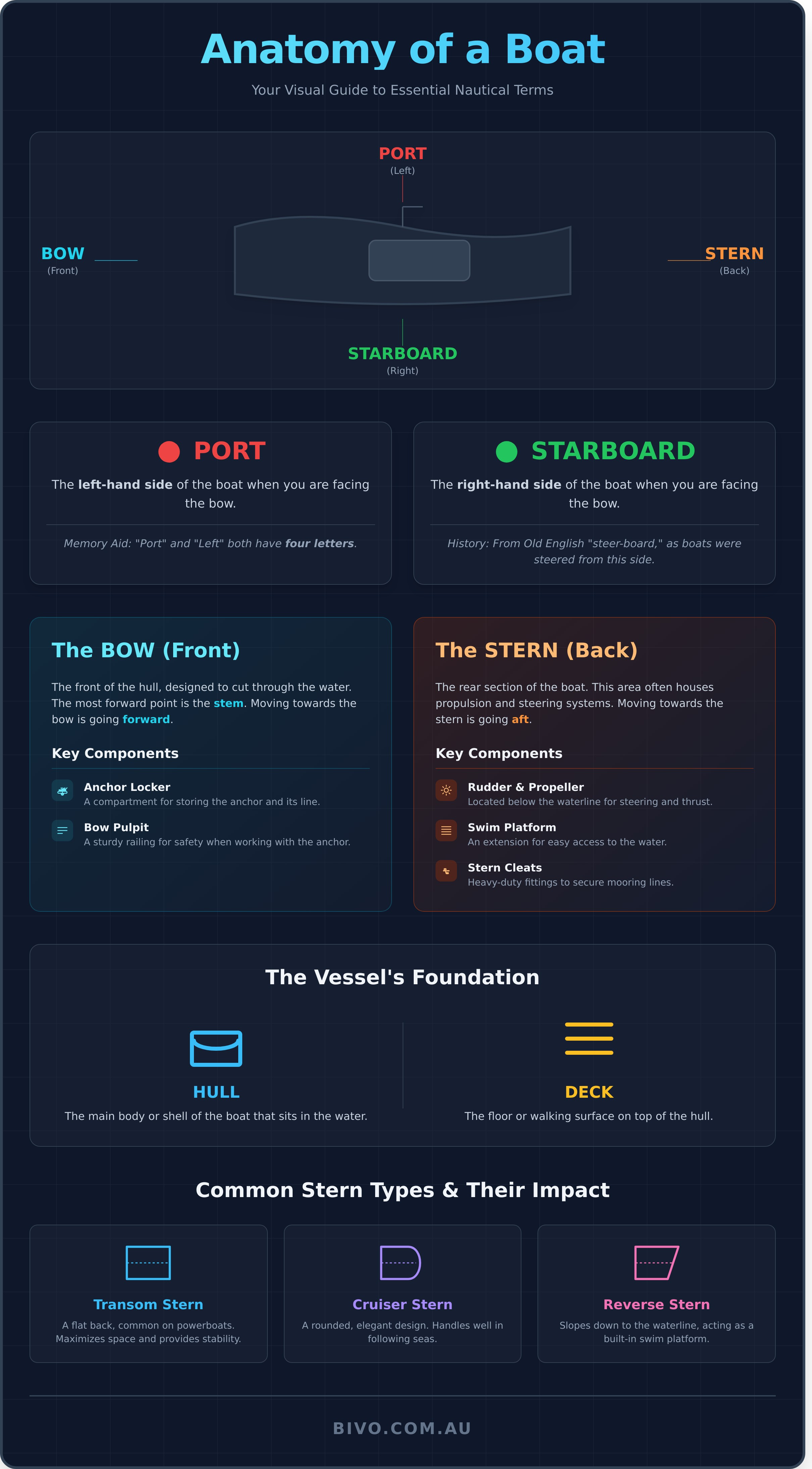
Let's get straight to it. If you're asking, "what is the back of a boat called?", the correct nautical term is the stern. While it's the physical rear section of the vessel, the directional term is 'aft'. For example, you walk aft to get to the stern. Using the right language isn't just about sounding experienced; it's essential for clear communication and safety on board. When someone yells "check the stern lines," there should be no confusion. Understanding these foundational concepts, often detailed in a full Glossary of nautical terms, is the first step to becoming a competent skipper.
Key Components Found at the Stern
The stern is a hub of critical equipment. It's where control and power often originate, and it houses several key components essential for operation and recreation.
- The Transom: This is the flat or near-flat surface at the very back of the stern. On most recreational powerboats in Australia, it's where the outboard motor is mounted.
- Rudder and Propeller: Located below the waterline, the propeller provides thrust to move the boat forward, while the rudder (on inboard and sterndrive boats) is used for steering.
- Swim Platform/Deck: A popular feature, this is an area extending from the transom that makes swimming, fishing, and boarding from the water much easier and safer.
- Stern Cleats: These heavy-duty fittings are used to secure mooring and docking lines. They are non-negotiable for safely tying up your boat at a jetty or marina.
Common Types of Sterns (and What They Mean for You)
The shape of a stern isn't just for looks; it directly impacts a boat's performance, stability, and interior volume. Here are a few common designs you'll see on Australian waterways:
- Transom Stern: The most common type on modern powerboats. Its flat, wide design maximises cockpit space and provides excellent stability at rest, making it ideal for fishing and family outings.
- Cruiser Stern: Also known as an elliptical stern, this rounded design is classic and elegant. It handles well in a following sea and is common on many yachts and traditional cruisers.
- Reverse Stern (Sugar-Scoop): This design features a stern that slopes down from the deck to the waterline. It offers incredibly easy access to the water, effectively acting as a built-in swim platform.
Ultimately, the design of the stern affects everything from how your boat handles waves to the amount of usable space you have for gear and guests.
Bow, Port, and Starboard: Navigating the Rest of the Boat
Now that you know the answer to what is the back of a boat called is the stern, we can move our tour forward. Understanding the other key directional terms is essential for clear communication and safe operation on the water. These terms provide every person on board with a fixed, unambiguous frame of reference, no matter which way they are facing.
The Bow: The Pointy End
The bow is the very front of the boat. It’s the part of the hull designed to cut through the water efficiently, providing lift and reducing drag. The most forward point of the bow is called the stem. Depending on the vessel, the bow area often includes several key pieces of equipment:
- Anchor Locker: A dedicated compartment for storing the anchor and its rope or chain.
- Bow Pulpit: A sturdy railing extending from the bow, providing safety for anyone working with the anchor.
- Cleats: Heavy-duty fittings used to secure mooring lines.
Port and Starboard: Your Left and Right on the Water
On a boat, ‘left’ and ‘right’ are replaced with ‘port’ and ‘starboard’. These terms are constant, regardless of the direction you are facing. When you are on the boat looking forward toward the bow:
- Port is the left-hand side.
- Starboard is the right-hand side.
An easy way to remember this is that ‘port’ and ‘left’ both have four letters. Historically, starboard comes from the old English "steer-board," as boats were once steered with an oar on the right side. For navigation at night, port is indicated by a red light and starboard by a green light.
Why Nautical Terms Matter Over Simple Directions
Using correct terminology is a critical part of boating safety, not just tradition. If a skipper yells "Watch out on your left!", it could mean something different to a person facing the bow versus someone facing the stern. This confusion can be dangerous. Port and starboard are fixed points on the vessel itself, eliminating all ambiguity. Mastering these official boating terms ensures every command is understood instantly and correctly, which is vital in tight quarters or emergencies.
The Hull and Deck: The Body and Floor of Your Vessel
While many new boaters start by asking questions like what is the back of a boat called, the true foundation of any vessel is its hull and deck. The hull is the main body that sits in the water, providing buoyancy and stability. The deck is the top surface you walk and work on. Deep inside the hull is the bilge, the lowest point where water collects before being pumped out. Understanding these core components is the first step to becoming a confident skipper.
Understanding the Hull
The hull's shape dictates how a boat moves through the water. There are two primary types: displacement hulls push through the water, while planing hulls are designed to rise up and skim across the surface at speed. Key measurements define a hull's performance:
- Keel: The central 'spine' running along the bottom of the hull. It provides structural strength and stability, reducing sideways drift.
- Beam: This is the measurement of the boat at its widest point. A wider beam generally means more stability and interior space.
- Draft: The vertical distance from the waterline to the bottom of the keel. Your boat's draft determines the minimum depth of water you can safely navigate.
On Deck: The Topside of the Boat
The deck is the main operational area of your vessel. It houses the controls and the hardware needed for sailing and mooring. The cockpit is the primary area where the boat is steered and controlled, but there are many other terms for the topside of a boat. For a full list of common boating terminology, including parts of the cabin and helm, a good glossary is invaluable. Key features on deck include:
- Gunwale (or Gunnel): The upper edge of the boat's side. It adds structural integrity and is often where fittings like rod holders are mounted.
- Lifelines and Railings: Essential safety features designed to prevent crew from falling overboard. They must be strong and well-maintained.
Essential Deck Hardware and Fittings
Your deck's functionality depends on high-quality hardware. With over 30 years of industry experience, we know that reliable fittings are not just a convenience-they are critical for safety. Essential hardware includes:
- Cleats: Strong metal or composite fittings used to secure ropes for docking and anchoring.
- Winches: Mechanical devices that provide a mechanical advantage to pull in ropes (sheets or halyards) under heavy load.
- Fairleads: Guides that direct a rope's path, preventing it from rubbing and chafing on other surfaces.
Ensuring this hardware is in top condition is vital for safe and pleasant boating. Shop for quality marine hardware and deck fittings at BIVO.
Inside the Boat: Cabins, Helm, and Key Spaces
Now that we’ve covered the exterior, let's step inside. While you might know what is the back of a boat called, the interior has its own set of essential terms. Larger vessels feature dedicated living quarters, but even the smallest tinnie has a specific name for its control station. Understanding this terminology is practical and key to safe, efficient communication on the water.
The Helm: The Captain's Command Centre
The helm is the command centre of any boat. It is the station where the vessel is steered and controlled. Here you will find the wheel or tiller, throttle controls, and critical navigation instruments like the GPS, VHF radio, and depth sounder. The reliability of this area depends entirely on a robust marine electrical system. From starting the engine to powering your navigation lights, quality wiring and components at the helm are non-negotiable for safety.
Common Living Quarters Explained
On boats with cabins, rooms have unique maritime names. Using the correct term ensures everyone onboard understands instructions clearly, especially in an emergency. These names are standard across most cabin cruisers, yachts, and houseboats.
- Galley: The boat’s kitchen. This is where you'll find the stove, sink, and food storage.
- Head: The bathroom or toilet facilities. The name originates from its traditional location at the ship's head (the bow).
- Berth: A bed or designated sleeping bunk on a boat.
- Saloon/Salon: The main social cabin, which functions as a living room or dining area.
Directional Terms Onboard
Just as you have specific names for the parts of a boat, there are specific terms for moving around it. Using these terms avoids confusion and is a mark of an experienced boater. It's just as fundamental as knowing what the bow, stern, port, and starboard are.
- Forward: Moving toward the bow (the front).
- Aft: Moving toward the stern (the back).
- Topsides: The area of the hull that sits above the waterline. When you are on deck, you are topside.
- Athwartships: Moving from one side of the boat to the other (across the beam).
Mastering these terms makes you a more confident and competent member of any crew. Equipping these spaces with the right gear is the next step, and with 30 years in the industry, we can help you find the quality marine products you need.
Mastering the Lingo: A Quick-Reference Glossary
To truly get comfortable on the water, you need to speak the language. It goes beyond simply knowing what is the back of a boat called; mastering the core terminology ensures clear communication and safer boating. This quick-reference glossary covers the essential terms every Australian boater should know. Keep it handy as a practical guide for your next trip out on the water.
We have organised the most common and easily confused terms into a simple format for maximum clarity. This will help you sound like a seasoned professional in no time.
Directional and Side Terms
Understanding direction is fundamental. These terms are used universally on the water to avoid confusion, especially in busy channels or during mooring. They are always used relative to the boat itself, not the person.
Stern: The physical back or rear part of the boat.
Bow: The physical front or forward part of the boat.
Port: The left side of the boat when you are on board and facing the bow (the front).
Starboard: The right side of the boat when you are on board and facing the bow.
Structural Terms
These terms describe the main components of your vessel. Knowing them is crucial for maintenance, operation, and describing your boat to others. From the main body to the steering station, these are the building blocks of any boat.
Hull: The main body or shell of the boat, from the deck down to the keel.
Deck: The upper, flat surface of the boat that you can stand or walk on.
Helm: The steering station of the boat, where the wheel and engine controls are located.
Transom: The flat vertical surface that forms the stern. This is where an outboard motor is typically mounted and a key part of answering "what is the back of a boat called".
Common 'Rope' Terms
On a boat, a rope is almost never just a 'rope'. Using the correct term for a line shows experience and ensures everyone on board understands its specific job. Each line has a distinct purpose, from securing the vessel to managing sails.
Line: The correct nautical term for most ropes used on a boat that have a specific purpose.
Painter: A line attached to the bow of a dinghy or small boat, used for tying it up or for towing.
Mooring Lines: The set of lines used to secure a boat to a dock, pier, or another boat.
Having the right equipment is just as important as knowing the terminology. Need reliable lines for your boat? View our range of marine ropes.
From Stern to Bow: Your Boating Vocabulary is Set
You're now equipped with the essential language of boating. From understanding what is the back of a boat called (the stern) to confidently distinguishing port from starboard, this knowledge is your foundation for safer, more enjoyable experiences on the water. Knowing your way around the hull, deck, and helm isn't just trivia; it's a critical part of competent seamanship and clear communication.
The next step is ensuring your vessel is as reliable as your newfound knowledge. For over 30 years, BIVO has been the trusted authority in marine hardware for both trade professionals and retail customers across Australia. We offer practical, high-quality solutions built on decades of experience. Equip your boat with quality hardware from BIVO's extensive range and benefit from our no-nonsense expertise.
Enjoy Fast & Free Delivery Australia Wide and get back on the water with confidence. We're here to help you make the most of every trip. Happy boating!
Frequently Asked Questions
What is the bottom of a boat called?
The bottom of a boat is called the hull. This is the main, watertight body of the vessel that sits in the water. The hull's design is critical for the boat's stability, speed, and how it handles in different conditions. Hulls come in various shapes, from flat-bottoms for calm inland waters to deep-V designs for navigating rougher seas. Proper maintenance of the hull is essential for the safety and performance of your boat.
What are the ropes on a boat called?
On a vessel, ropes are correctly referred to as lines. Each line has a specific name depending on its job. For instance, the lines used to secure a boat to a dock are called dock lines or mooring lines. Lines used to control the sails are known as sheets, while lines that hoist sails are called halyards. Using the proper terminology is a key part of clear and safe communication on the water.
What is the difference between aft and stern?
While both terms relate to the rear of a boat, they are not interchangeable. The stern is the physical back part of the boat's structure. Aft is a directional term, meaning toward or near the back. For example, you would walk aft to get to the stern. So, if you're asking "what is the back of a boat called," the most accurate answer for the physical part is the stern. This distinction is important for clear commands and navigation.
How do you remember the difference between port and starboard?
A simple and effective way to remember is that "port" and "left" both have four letters. Port is the left-hand side of the boat when you are on board and facing forward (toward the bow). Starboard is therefore the right-hand side. At night, navigation lights help identify direction: port is always marked with a red light, and starboard is marked with a green light. This knowledge is fundamental for safe boating.
What is the driver's seat or control area of a boat called?
The control station of a boat is known as the helm. This is where you find the steering mechanism (a wheel or tiller), engine controls, and navigation equipment like a compass and GPS. The person operating the boat from this position is called the helmsman. Whether it is an open console on a small tinnie or an enclosed bridge on a large cruiser, the helm is the command centre of the vessel.
What is the kitchen on a boat called?
The kitchen area on a boat is called the galley. This term is used for any food preparation area, from a compact space with a single burner on a small yacht to a large, fully equipped kitchen on a motor cruiser. Galleys are designed for marine use, often featuring fiddles (raised edges on counters) to stop items from sliding off and secure latches on cabinets to keep contents in place while underway.