

Could a single millimetre of neoprene be the difference between a four hour session and a thirty minute retreat to the car heater? For most Australian surfers and divers, the answer is a definitive yes. You likely already know that shivering through a winter swell in a suit that's too thin is a total waste of a good day. It's equally frustrating to lose your range of motion or overheat because you wore a heavy 4/3mm for a mild Queensland autumn. Our wetsuit temperature guide cuts through the technical jargon to ensure you get the right fit for your specific local conditions.
BIVO has spent 30 years helping Australians gear up for the water. We know that a 3/2mm notation means nothing if you don't understand how it handles a 16°C Southern Ocean breeze. You'll master exactly which thickness suits every Australian season. You'll also learn why accessories like 2mm boots are essential when the mercury drops below 15°C. We provide a clear breakdown of gear requirements for every state, from the tropical north to the icy depths of Tasmania. This guide gives you the confidence to invest in a suit that offers maximum performance and value for your 2026 season.
Key Takeaways
- Decode wetsuit thickness notation to ensure you select the right neoprene protection for your torso and limbs.
- Consult our updated 2026 wetsuit temperature guide to match specific Celsius ranges with the ideal millimetre thickness for your sport.
- Learn why water temperature is only half the story, accounting for wind chill factors that impact skiers and wakeboarders.
- Get regional equipment recommendations tailored to Australian conditions, from the Gold Coast to the NSW Central Coast.
- Master the "Golden Rule" of wetsuit maintenance and measurement tips to protect your investment and ensure a perfect fit.
What is Wetsuit Thickness and Why Does it Matter?
Wetsuit thickness refers to the physical measurement of the neoprene foam used in the suit's construction, measured in millimeters (mm). This measurement is the most critical factor when consulting a wetsuit temperature guide because it determines how long you can stay in the water before fatigue or cold sets in. For over 30 years, we've seen how the right thickness makes the difference between a productive day on the water and a short, uncomfortable session.
A wetsuit works by trapping a thin layer of water between your skin and the neoprene. Your body heat warms this water, creating a personal microclimate. This comprehensive guide to wetsuits explains that the neoprene itself provides the insulation. Thicker foam contains more insulating gas, which slows the transfer of heat from your body to the ocean. In Australian conditions, where water temperatures can fluctuate from 14°C in Victorian winters to 26°C in Queensland summers, choosing the correct millimeter rating is essential for safety and performance.
Selecting a suit involves a direct trade-off between thermal protection and range of motion. A 5mm suit offers maximum warmth but adds weight and resistance to every movement. Conversely, a 2mm suit feels like a second skin but won't protect you in 16°C water. Most modern designs use varying thicknesses across different panels to balance these needs. This strategic placement ensures your vital organs stay warm while your shoulders and legs remain mobile. We've found that a 1mm difference in thickness can increase heat retention by approximately 15% in stationary water conditions.
Understanding the 3/2mm vs. 4/3mm Breakdown
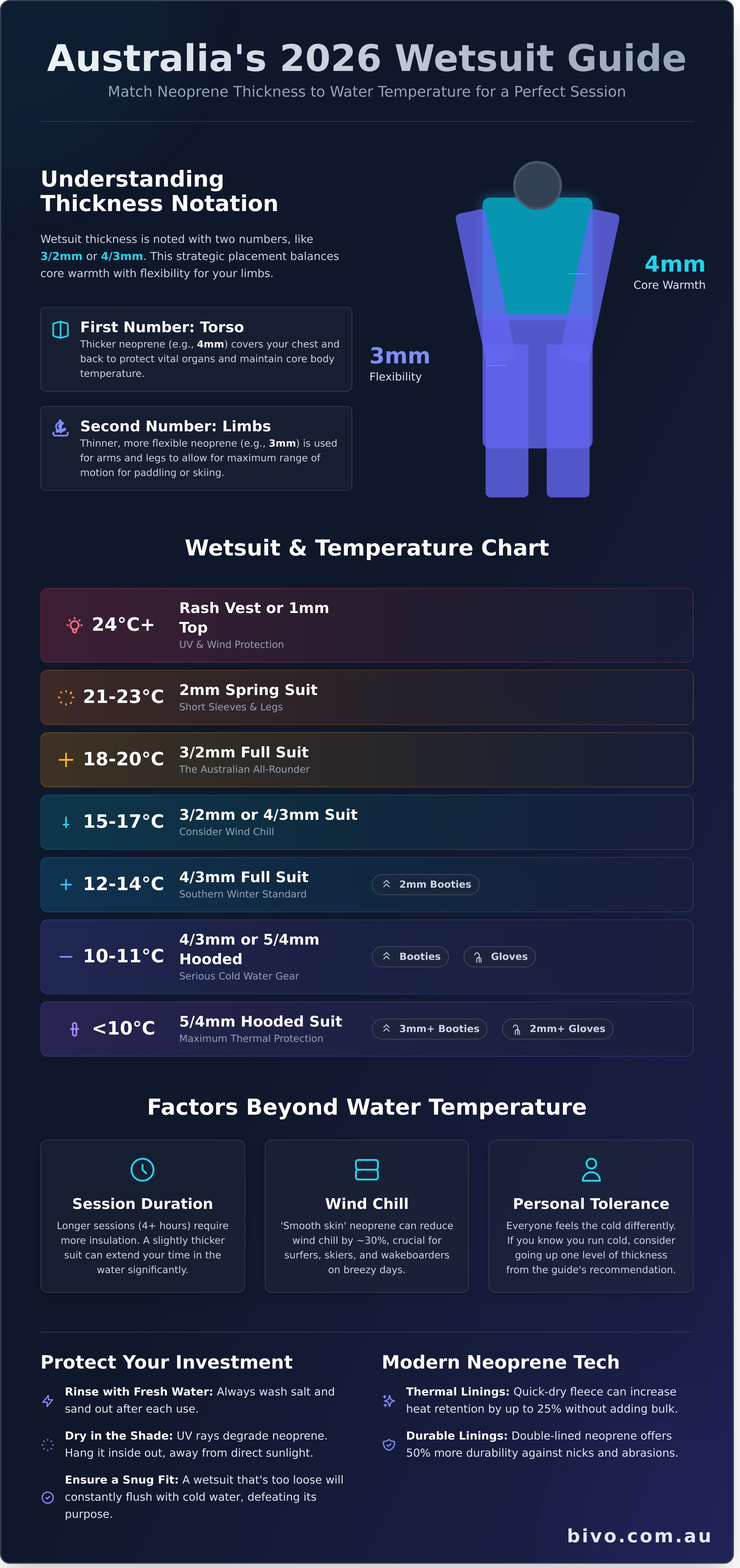
Wetsuits typically use a double-number notation like 3/2mm or 4/3mm. The first number represents the thickness of the neoprene on the torso and back panels. The second number indicates the thickness used on the arms and legs. We prioritize the torso because maintaining core temperature is the body's primary survival mechanism. Neoprene is a synthetic rubber filled with nitrogen bubbles. Using thinner 2mm or 3mm material on the limbs allows for the high-repetition movements required for paddling or water skiing without causing premature muscle exhaustion.
Thermal Properties of Modern Neoprene
Modern neoprene technology has advanced significantly since the late 1990s. High-end suits now feature internal thermal linings, often made of quick-dry fleece or polypropylene, which can increase heat retention by up to 25% without adding bulk. These linings trap additional air pockets within the suit to act as a secondary barrier against the cold. You'll also encounter 'single-lined' and 'double-lined' options. Single-lined neoprene, often called 'smooth skin,' features a rubbery exterior that sheds water and reduces wind chill by approximately 30%. Double-lined neoprene has nylon laminated on both sides, providing 50% more durability against nicks and abrasions from equipment or reef contact.
When you're looking for value for money, understanding these technical specs helps you invest in the right gear. We've spent three decades helping Australians find the perfect fit for their local breaks and waterways. Whether you're diving in the Great Australian Bight or surfing in NSW, the thickness of your suit is your primary defense against the elements. Our wetsuit temperature guide helps simplify this choice so you can get back to what matters most.
Of course, these principles apply globally. For those planning a dive trip to a warmer climate like Mexico, resources from a local operator like Cozumeldivehub can offer destination-specific gear advice.
The Wetsuit Temperature & Thickness Chart for 2026
Selecting the right neoprene thickness is the difference between a productive session and an early exit. Bivo has spent 30 years monitoring Australian water conditions to understand exactly how temperature affects performance. This 2026 wetsuit temperature guide aligns modern material technology with the specific needs of local athletes. Neoprene has become lighter and more flexible, but the core thermal requirements remain unchanged. Use this data to match your gear to the thermometer.
- 24°C and above: Rash vest or 0.5mm - 1mm neoprene top.
- 21°C to 23°C: 2mm spring suit (short sleeves and legs).
- 18°C to 20°C: 3/2mm full suit (steamer).
- 15°C to 17°C: 3/2mm or 4/3mm full suit depending on wind chill.
- 12°C to 14°C: 4/3mm full suit with 2mm booties.
- 10°C to 11°C: 4/3mm or 5/4mm hooded suit with booties and gloves.
- Sub-10°C: 5/4mm hooded suit, 3mm booties, and 2mm gloves.
The average Australian surfer or skier typically maintains two setups. A summer kit focuses on UV protection and wind shielding. A winter kit prioritizes heat retention and seam integrity. Transitioning between these setups usually occurs in May and October across most southern states.
Warm Water Conditions (20°C to 25°C+)
Warm water doesn't mean safety from the elements. In temperatures above 20°C, a 1mm or 2mm spring suit provides the best balance of freedom and core warmth. These 'shorties' protect against 98% of harmful UV rays and prevent wax rash or harness chafe. If you're water skiing at 40km/h in mid-summer, the wind chill can still strip body heat. A simple rash vest is often sufficient for sun protection, but a 1mm vest offers a 15% increase in core temperature retention for longer sessions.
Cool to Cold Water Solutions (12°C to 19°C)
The 3/2mm full suit is the undisputed workhorse of the Australian coast. It's versatile enough for Sydney winters and Victorian autumns. When temperatures dip toward 12°C in Tasmania or the Great Ocean Road, you must upgrade to a 4/3mm suit. This adds 33% more insulation to the torso. At these temperatures, following cold water safety guidelines is critical to avoid the onset of hypothermia.
Seam construction becomes vital in cold water. Look for GBS (Glued and Blindstitched) seams. These seams are glued together before being stitched halfway through the material. This process ensures no needle holes go entirely through the neoprene, reducing water entry by up to 90% compared to flatlock stitching. If you are regularly heading into sub-15°C water, you can find high-performance steamers that utilize internal taping for even better heat retention.
Don't ignore your extremities when the water hits 14°C. Your body naturally pulls blood toward your core to protect vital organs. This leaves feet and hands vulnerable to numbness. Adding 2mm booties is a practical 2026 standard for anyone spending more than 60 minutes in the water during a southern winter. Accessories aren't just for comfort; they maintain the tactile feedback you need to operate your gear safely.
Beyond the Thermometer: Factors That Change Your Needs
Many people think a thermometer tells the whole story. It doesn't. Relying solely on a basic Wetsuit Temperature Guide can lead to a miserable session if you ignore external variables. Bivo has spent 30 years in the industry helping Australians stay warm in the Southern Ocean and tropical north alike. We know that wind, activity levels, and your own physiology dictate your comfort more than the water temperature itself.
Your heart rate is your primary internal heater. A surfer waiting 15 minutes for a set in 16°C water loses heat rapidly through conduction. Their body is stationary. Conversely, a wakeboarder performing active cuts and jumps generates significant metabolic heat. However, that wakeboarder also faces the "wind chill" factor. Moving at 35km/h on the water creates an evaporative cooling effect. This can make a 20°C day feel like 12°C the moment you pull out of the water. If you aren't submerged, the air speed is your biggest enemy.
Individual biology is another major factor we see daily. Muscle mass and body fat percentages act as internal insulation. A person with a higher basal metabolic rate stays warmer for longer. If you typically feel the cold more than your peers, we suggest increasing your suit thickness by at least 1mm over the standard wetsuit temperature guide recommendations. There is no prize for shivering. We're here to help you stay in the water longer by choosing gear suited to your specific body type.
Towed Sports vs. Immersion Sports
Skiers and wakeboarders require different features than surfers or divers. When you are on the boat or being towed, you are exposed to constant wind. We recommend suits with "smooth skin" or single-lined neoprene on the chest and back panels. This rubbery surface sheds water immediately. It prevents the wind from chilling the damp fabric through evaporation. Surfers usually choose double-lined neoprene for better flexibility and resistance to board scuffs. For high-speed sports, you also need reinforced seams. These must handle a 40km/h impact with the water surface without bursting or leaking. Quality gear is about safety as much as comfort.
Seam Construction and Water Flush
The way your suit is stitched determines its thermal limit. Flatlock seams are breathable and found in summer suits; they let water through constantly. Glued and Blind Stitched (GBS) seams are the industry standard for Australian winters. They are water-tight because the needle never fully penetrates the neoprene. For maximum warmth in 14°C water or lower, choose Liquid Taped seams. These provide a 100% waterproof seal and extra durability. "Flushing" is the ultimate heat killer. This happens when cold water enters through the neck or zips during a fall. A perfectly fitted 3/2mm suit is 25% warmer than a loose 4/3mm suit that allows water to circulate inside. Our 30 years of experience proves that fit is the most important technical spec. We offer Fast & Free Delivery Australia Wide to get you the right size quickly.
Regional Guide: Wetsuit Needs for Australian Waters
Australia’s 34,000 kilometres of coastline mean water conditions vary wildly between states. You cannot rely on a single suit if you plan to travel. This wetsuit temperature guide breaks down the specific requirements for our major coastal hubs based on decades of local experience.
In Queensland’s Gold Coast and Sunshine Coast, the water stays relatively warm. Temperatures typically range from 21°C in August to 26°C in February. For most of the year, a high-quality rash vest is sufficient for UV protection. During the short winter window, a 2mm spring suit or a 1.5mm neoprene top provides enough warmth for early morning sessions without sacrificing mobility.
Sydney and the NSW Central Coast require a more disciplined two-suit rotation. During the summer, a 2mm shorty or even boardshorts are standard as water hits 23°C. However, winter temperatures drop to 17°C or 18°C. A 3/2mm full steamer is the industry standard for these months. It provides the necessary thermal protection while remaining flexible enough for high-performance activities.
Victoria and South Australia are significantly colder. Winter water temperatures in places like Torquay or the Eyre Peninsula often plummet to 13°C or 14°C. A 4/3mm steamer is not a luxury here; it is a necessity for survival and comfort. We recommend adding 3mm booties during July and August to prevent heat loss through your extremities. The wind chill in these regions often makes the air feel much colder than the water itself.
Western Australia, particularly around Perth, presents a unique challenge. While water temperatures stay between 19°C and 23°C, the "Fremantle Doctor" wind creates a significant cooling effect. A 3/2mm steamer is the most versatile choice for Perth locals. It handles the fluctuating temperatures and protects against the afternoon wind chill that can cut through thinner materials.
Seasonal Shifts in the Tasman Sea
The East Australian Current (EAC) is the primary driver of water temperatures along the East Coast. It brings warm, tropical water southwards, but its strength varies throughout the year. You will often find that September water is colder than June water. This occurs because the ocean reaches its lowest thermal point at the end of the winter cycle. You must also prepare for upwelling events. These happen when strong North-Easterly winds push warm surface water offshore, drawing icy water up from the ocean floor. Temperatures can drop by 5°C in less than 24 hours. Having a backup 3/2mm suit ready in your kit is a smart move even in late spring.
Logistics: Shipping Gear Across Australia
When a sudden cold snap hits, you don't have time to wait weeks for equipment. Speed of delivery is essential for maintaining your time on the water. Bivo offers Fast & Free Delivery Australia Wide on all essential marine gear to ensure you stay warm regardless of the forecast. Our 30 years of experience in the industry allows us to curate a range that actually works for Australian conditions. We understand the difference between a Victorian winter and a Queensland summer. We focus on providing quality gear that offers genuine value for money. If you are unsure which thickness suits your local break, we are here to help you make the right choice.
Ready to upgrade your kit for the coming season? Shop our full range of marine and outdoor gear today.
Selection and Maintenance: Getting the Most Value
Choosing the right thickness is only half the battle. Even with the right data from a wetsuit temperature guide, your gear won't perform if it doesn't fit correctly or degrades after one season. Quality neoprene represents a significant investment, often ranging from A$300 to A$800 for high-performance steamers. To protect that investment, you need to understand the mechanics of fit and the chemistry of salt water degradation. At Bivo, we've spent 30 years helping Australians gear up for the water, and we've seen how simple maintenance doubles the life of a suit.
Sizing and Fitment Check
Fit is everything. A suit that's too large allows "flushing," where cold water enters through the neck and pushes out the warm water your body has heated. You'll know a suit is too big if you see pooling water at the small of your back or behind your knees. Conversely, a suit that's too small restricts your ribcage and makes breathing difficult. This leads to fatigue in under 20 minutes. When using a brand's size chart, prioritize your weight and chest measurements over height. These dimensions dictate how the suit seals against your skin. Pay close attention to the neck seal; it should be snug but not restrictive. A poor neck seal is the primary cause of painful salt water rashes and thermal loss. If you can easily slide two fingers between the neoprene and your neck, it's too loose.
Extending the Life of Your Neoprene
The "Golden Rule" of wetsuit care is non-negotiable: rinse with fresh water after every single session. Salt crystals are abrasive. When they dry inside the neoprene fibers, they act like microscopic sandpaper, wearing down the material from the inside out. This leads to "stink" and loss of flexibility. Proper maintenance ensures the thermal ratings found in our wetsuit temperature guide remain accurate for years. After rinsing, hang your suit inside out in a shaded area with good airflow. Avoid direct Australian sunlight, as UV levels often exceeding 11+ will bake the neoprene and make it brittle within months.
Just as you rinse your suit, taking care of your skin after exposure to the elements is crucial. Saltwater and sun can be dehydrating, and many surfers turn to natural wellness products for recovery. If you're looking for Australian-owned options, you can browse a curated collection at ripple-wave-atelier.myshopify.com.
- Never leave a wet suit in a hot car. Temperatures inside a parked vehicle can hit 60°C, which melts the specialized glues used in seam construction.
- Use wide, plastic hangers. Thin wire hangers concentrate the suit's weight on two small points, creating permanent shoulder creases and thinning the neoprene.
- Dry it inside out first. This protects the outer jersey and ensures the side touching your skin is dry for the next session.
Investing in quality gear is a long-term safety decision. A well-maintained suit provides consistent buoyancy and thermal protection, which are critical if you're caught in a rip or face a gear failure offshore. We believe in providing gear that stands up to the harsh Australian environment. Explore our full range of specialized marine hardware and water sports accessories today. Our 30 years in the industry mean we only stock equipment that offers genuine value for money. We're here to help you get the most out of every minute you spend on the water.
Stay Warm and Perform Better in 2026
Choosing the correct neoprene thickness is the difference between a productive session and an early exit. This wetsuit temperature guide provides the baseline for 2026, but you should always account for wind chill and your specific activity levels. Proper maintenance, such as rinsing with fresh water after every ocean dip, ensures your investment lasts for multiple seasons. It's about finding that essential balance between flexibility and thermal protection.
Bivo brings 30+ years of industry experience to every piece of gear we stock. As trusted Sydney-based marine specialists, we focus on providing practical solutions and quality equipment for Australian conditions. Whether you're navigating the chilly currents of Victoria or the temperate reefs of New South Wales, we've got the right fit. We offer Fast & Free Delivery Australia Wide to get you back in the water sooner. You'll find our range is curated for durability and performance. Our team is here to help you find the perfect gear for your local break.
Shop Premium Water Sports Gear at Bivo
We'll see you out there for your next great session.
Frequently Asked Questions
Is a 3/2mm wetsuit warm enough for winter in Sydney?
A 3/2mm wetsuit is sufficient for Sydney winter conditions where water temperatures average between 17°C and 19°C. This thickness provides enough thermal protection for 90 minute sessions during the cooler months of June through August. If you plan on surfing at dawn when air temperatures drop to 8°C, you might consider a 4/3mm suit for extra comfort. We've helped thousands of locals stay warm in 3/2mm neoprene over our 30 years in the industry.
What is the difference between a flatlock seam and a GBS seam?
Flatlock seams feature stitching that goes through both layers of neoprene, while GBS seams are glued together before being stitched halfway through the material. This makes GBS seams completely watertight, preventing cold flushes that occur with flatlock construction. Most high-performance options in our wetsuit temperature guide utilize GBS to ensure you stay warm in water below 20°C. Choosing GBS adds about 25% more heat retention to your suit during winter.
Do I need booties and a hood for 15-degree water?
You should wear 2mm or 3mm booties in 15°C water to maintain circulation and feel in your feet. While a hood isn't mandatory until the water hits 13°C, it prevents significant heat loss on days with wind speeds over 20 knots. Surfers in Victoria and Tasmania regularly use both to extend their sessions by 45 minutes. Keeping your extremities covered is a practical way to handle the 14°C to 16°C range found in Southern Australian waters.
Can I use a surfing wetsuit for water skiing and wakeboarding?
You can use a surfing wetsuit for skiing and wakeboarding, but be aware that surf suits are designed for flexibility rather than high-speed impact. Water hitting the chest at 50km/h can cause "ballooning" if the neck seal isn't tight. Surf neoprene is often softer, so it may show wear faster from ski bindings or board edges. For occasional use, your 3/2mm surf suit provides excellent value for money and reliable warmth.
How much does a good quality wetsuit cost in Australia?
A high-quality wetsuit in Australia typically costs between A$350 and A$700 depending on the neoprene grade and seam tech. Entry-level models start at A$220, while professional-grade 4/3mm suits with thermal linings can reach A$850. Spending A$450 usually secures a durable suit that will last 3 seasons of regular use. We focus on providing gear that balances price with 30 years of proven durability in local conditions.
What happens if my wetsuit is too thick for the water temperature?
You'll likely overheat and experience restricted movement if your suit thickness exceeds the requirements for the water temperature. Wearing a 5/4mm suit in 22°C Queensland water causes your core temperature to spike, leading to fatigue within 20 minutes. The extra neoprene also adds 1.5kg of weight when wet, making every movement more difficult. Always consult a wetsuit temperature guide to ensure your gear matches the 18°C to 21°C averages of your local break.
How do I stop my wetsuit from smelling after use?
Rinse your wetsuit inside and out with fresh, cold water immediately after every session to kill bacteria. Hang it doubled over a thick hanger in a shaded area with good airflow, as direct sunlight damages neoprene at temperatures above 30°C. Never leave your damp suit in a plastic bag or a hot car boot where bacteria multiply rapidly. Use a specialized, pH-neutral wetsuit wash every 10 sessions to keep the material smelling fresh and feeling supple.
Is there a difference between men's and women's wetsuit temperature ratings?
Temperature ratings are identical for men and women, but the physical fit significantly impacts how warm the suit actually feels. A 3/2mm suit is rated for 17°C to 20°C regardless of gender. However, women's suits are cut with different proportions to ensure there are no air pockets where cold water can pool. Since women often have a 10% lower resting metabolic rate, many female surfers opt for a 4/3mm suit slightly earlier in the season than men.