

Using a waterski rope for wakeboarding is a safety risk that can lead to a "slingshot" injury at speeds over 30 kilometres per hour. Most Australian boaties believe any line will do, but 30 years of experience in the marine industry proves that the wrong choice leads to gear failure and poor performance. You deserve a setup that handles the high UV index without degrading and stays tangle-free during a long day on the Murray River.
Understanding the technical differences in a wakeboard rope vs waterski rope is the only way to ensure a professional experience. We will explain why zero-stretch materials like Spectra are mandatory for wakeboarding, while the controlled stretch of Poly-E is necessary for skiers. This guide covers handle designs and material science to help you spend your A$150 to A$300 with total confidence. You'll learn exactly how to choose a line that improves your pull and keeps your riders safe on the water. We're here to help you get the most out of your gear every time you head out.
Key Takeaways
- Learn why the primary difference in wakeboard rope vs waterski rope is elasticity, and how zero-stretch lines provide the consistent tension needed for aerial jumps.
- Discover the technical benefits of Spectra and Dyneema fibers, ensuring you select high-tensile materials that withstand the rigours of Australian marine environments.
- Understand how handle width impacts your performance, from the wide grips required for wakeboard handle passes to the narrow designs built for waterski leverage.
- Identify how to prevent the dangerous "slingshot effect" by choosing the correct line for your specific water sport and avoiding improper towing setups.
- Benefit from Bivo’s 30 years of industry experience to choose professional-grade hardware that delivers reliability and genuine value for money on the water.
Understanding the Core Differences: Wakeboard Rope vs Waterski Rope
Choosing the right gear is the difference between a productive day on the Murray River and a week of sore shoulders. The primary distinction in the wakeboard rope vs waterski rope debate comes down to one technical factor: elasticity. While they might look similar on the rack, these lines are engineered for opposite physical forces. Our 30 years of experience in the Australian marine industry has shown that using the wrong line is the fastest way to ruin a ride.
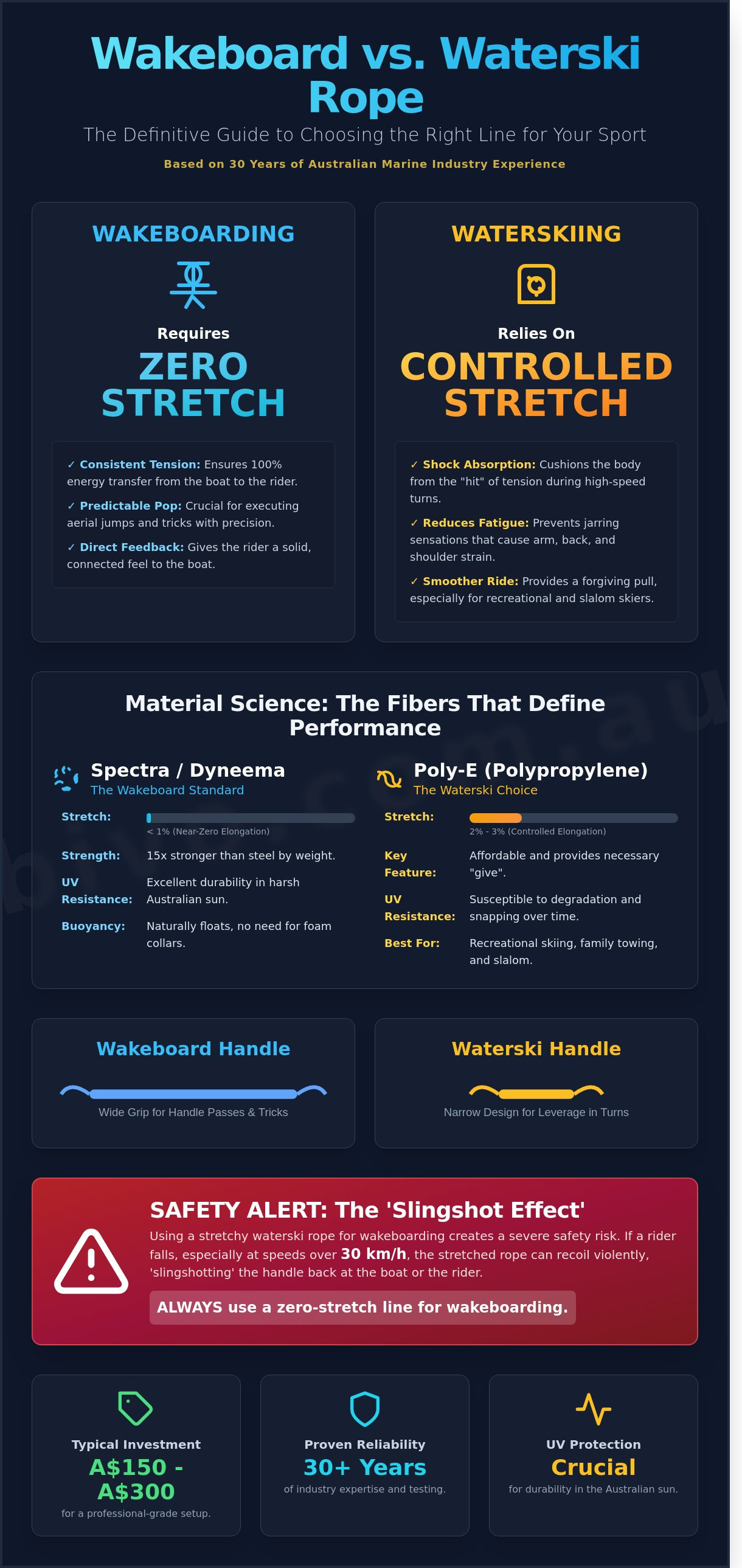
Wakeboarding requires a line with zero stretch to maintain consistent tension throughout a jump. Waterskiing relies on controlled stretch to act as a shock absorber during high-speed turns. Using the wrong rope isn't just a minor inconvenience. A stretchy rope used for wakeboarding can lead to dangerous recoil when a rider lets go, while a rigid line used for slalom skiing can cause significant arm fatigue during a 60 km/h turn. Making the right choice ensures you stay on the water longer and progress faster.
Why Wakeboarders Need Zero Stretch
Wakeboarding is about using the boat's energy to generate lift. When you edge toward the wake, you "load" the line. A non-stretch rope made from materials like Spectra or Dyneema ensures that 100% of that energy transfers directly to your board. This creates a solid, predictable feel that allows you to pop off the wake with precision. If the line stretches even 5%, that energy is lost in the rope instead of being used for your jump. A stretchy rope is the ultimate performance-killer for any wakeboarder trying to clear the wake.
The Role of Elasticity in Slalom Skiing
Waterskiing, particularly slalom, involves intense bursts of speed followed by sharp, decelerating turns. As a skier finishes a turn and the boat pulls away, there's a massive "hit" of tension. Polypropylene (Poly-E) lines are the standard here because they offer a 2% to 3% stretch factor. This slight give protects the skier's body by absorbing the initial snap of the boat's power. It prevents the jarring sensation that often leads to lower back and shoulder strain.
- Recreational Skiers: Standard Poly-E ropes provide maximum comfort and reduce muscle fatigue for casual weekend riders.
- Professional Slalom Riders: These athletes use high-grade lines with minimal, calibrated stretch to maintain a balance between response and safety at high speeds.
At Bivo, we've spent three decades helping Australians find the right equipment for their specific needs. Whether you're hitting the wake or carving a slalom course, we're here to help you get the best value for your money. Selecting the correct line is a small investment that makes a massive difference in your safety and enjoyment on the water.
Materials and Construction: Spectra, Dyneema, and Poly-E
Understanding the difference between a wakeboard rope vs waterski rope starts with the chemistry of the fibers. High-performance lines use Ultra-High-Molecular-Weight Polyethylene (UHMWPE), commonly branded as Spectra or Dyneema. These materials are 15 times stronger than steel by weight. They offer near-zero stretch, which is the primary requirement for wakeboarding. For recreational skiing or towing tubes, Poly-E (Polyethylene) remains the standard choice. It provides a necessary "give" that cushions the rider's joints during high-speed turns. In Australian conditions, where the UV index frequently exceeds 11 during summer, your choice of material dictates whether your gear lasts one season or five.
- Spectra/Dyneema: Highest tensile strength, zero stretch, and lightweight.
- Poly-E: Affordable, flexible, and provides 2% to 3% elongation.
- UV Resistance: Essential for the harsh Australian sun to prevent brittle snapping.
Spectra and Dyneema: The Non-Stretch Leaders
Spectra and Dyneema are the industry benchmarks for wakeboarding. These ropes feature a long-chain molecular structure that prevents elongation under heavy loads. While a standard rope might stretch several feet, a Dyneema line maintains its length within a 1% margin. This rigidity allows riders to load the line for jumps without losing energy to rope stretch. These fibers are naturally buoyant. They stay on the surface without the need for bulky foam collars. Most premium lines include a polyurethane coating. This adds a layer of protection against salt crystals and board edge nicks, ensuring the rope remains durable for years.
Polypropylene: The Versatile Budget Option
Poly-E is the most common material for recreational skiing and family towing. It's affordable and handles the slight stretch required for slalom turns. However, Poly-E is more susceptible to UV degradation and saltwater crystallization than its high-end counterparts. After 24 months of regular use, internal fibers often begin to snap. This is usually visible as a "fuzzy" texture on the rope's surface. You should retire any Poly-E line that shows significant color fading or becomes stiff to the touch. We've seen thousands of lines in our 30 years of industry experience, and we always recommend checking for brittle sections before every outing. If your current gear looks weathered, you can browse our professional-grade ropes to find a safer, more reliable replacement.
Handle Design: Width, Grip, and Floatation
The handle is your primary connection to the boat's power. Selecting the correct wakeboard rope vs waterski rope requires looking closely at the bar itself. Wakeboarders and skiers interact with the water differently, so their handles are engineered for specific physical demands. We've seen handle technology evolve over 30 years in the industry, moving from simple wooden dowels to high-traction, ergonomic tools.
Anatomy of a Wakeboard Handle
Wakeboard handles are significantly wider than ski handles, typically measuring between 13 and 15 inches. This extra width is essential for handle passes. When you're spinning a 360-degree rotation, you need a larger target to grab behind your back. A narrow handle makes these tricks nearly impossible to stick consistently.
The grip diameter on wake handles is usually larger, often 29mm to 32mm. This thicker bar helps prevent hand fatigue and cramping during long sessions in the park or behind the boat. For riders pushing into advanced territory, look for handles with "T-bars" or wrap-style attachments. These small side bars allow you to pre-wrap the line around your body for technical tricks while maintaining a secure primary grip.
Anatomy of a Waterski Handle
Waterski handles prioritize leverage over trick versatility. These bars are narrower, measuring 11 to 13 inches. The compact width keeps your arms tucked in close to your body, which is vital for maintaining balance during high-speed slalom turns. The triangular bridle design ensures pulling power remains centered, preventing the handle from twisting in your grip as you cross the wake.
Skiers generally prefer a smaller grip diameter of 25mm to 28mm. This allows the fingers to "hook" more effectively around the bar, providing a more secure hold under heavy tension. Many specialized slalom handles also feature integrated finger guards. These plastic shields protect your knuckles from rope spray and accidental contact with the line during aggressive cuts.
Grip materials vary based on your preference for comfort and traction:
- EVA Foam: Lightweight and cost-effective; found on 75% of entry-level handles.
- Tacky Rubber: Provides maximum grip when wet; ideal for use with gloves.
- Suede: Stays soft on the hands but can become heavy and slippery once saturated.
Safety on Australian waterways is paramount. High-visibility handle floats are a mandatory feature for any quality line. These floats ensure the handle stays on the surface after a fall. This makes it easier for the rider to find and prevents the rope from sinking into the propeller. We recommend bright orange or yellow floats to ensure your gear is visible to other boaties even in choppy conditions.
Safety and Maintenance: Avoiding the Slingshot Effect
Safety on the water starts with understanding your equipment. The "slingshot effect" occurs when a rope under tension suddenly releases its energy. If you use a stretchy Poly-E line, it acts like a massive rubber band. When a skier falls or the line snaps, the handle can recoil toward the boat at speeds exceeding 80 km/h. This physical reality is a primary reason why the wakeboard rope vs waterski rope choice is about more than just performance.
The Danger of Using the Wrong Rope
Wakeboard ropes use materials like Spectra or Dyneema. These fibres have near-zero stretch. This lack of elasticity is safer for high-speed wakeboard falls because the rope doesn't whip back toward the boat. You should never use a wakeboard rope to tow heavy inflatables. Towables create immense drag that these lines aren't designed to handle. A non-stretch line can snap under the weight of a 4-person tube, or it might even damage your boat's tow point. Don't mix and match handles and lines. A heavy waterski handle attached to a lightweight wake line creates an unbalanced weight distribution that is unpredictable during a wipeout.
Marine Rope Care in Australia
Australia has some of the harshest boating conditions in the world. Sydney's UV index frequently hits 11 or higher during summer. This intense radiation breaks down synthetic fibres, making them brittle and prone to failure. Saltwater also poses a threat. It leaves behind abrasive crystals that saw through the rope fibres from the inside out during every use. We've spent 30 years in the industry seeing the results of poor maintenance. Follow this checklist to protect your investment:
- Fresh Water Rinse: Wash your rope and handle with fresh water after every saltwater session.
- UV Protection: Store ropes in a dark locker; never leave them coiled on the deck in the sun.
- Knot Management: Untie all knots after your ride. A permanent knot can reduce the break strength of your line by 50%.
- Visual Inspection: Look for "fuzzing" or fraying on the outer jacket.
You must replace any rope immediately if you notice visible fuzzing, deep knots that won't undo, or significant UV discoloration. Safety is our priority, and we're here to help you find the right gear for your boat.
Ready for a safer ride? Browse our selection of quality water ski ropes and wakeboard lines designed for Australian conditions.
Choosing Your Setup with Bivo’s Expert Hardware
Selecting the right equipment is vital for a safe day on the water. Bivo brings 30 years of industry experience to every product we stock. We understand the technical nuances involved in the wakeboard rope vs waterski rope debate. Our focus is on providing trade-quality hardware that performs reliably for recreational users. This means you get gear built to professional standards that lasts longer and performs better under harsh Australian conditions. We don't deal in gimmicks; we provide the gear that keeps you moving.
Bivo’s Recommended Ropes and Bridles
Boat owners need hardware that protects both the rider and the vessel. Our 2.2M Outboard Motor Water Ski Bridle is a top choice for those with outboard engines. It features heavy-duty hooks and a pulley system to ensure an even pull while keeping the line clear of the motor. For general utility and high-strength applications, our Double Braid Polyester Marine Rope is a versatile option. It offers excellent UV resistance and minimal stretch. Our specialized tow ropes provide a high value-for-money proposition by combining durability with competitive pricing. You won't find unnecessary frills here; just hardware that works.
- 2.2M Outboard Bridle: Essential for balanced towing and motor clearance on outboard boats.
- Double Braid Polyester: High-strength marine rope for various utility and towing needs.
- Trade-Quality Standards: Equipment designed to withstand the salt and sun of the Australian coast.
Why Trust Bivo for Your Marine Gear?
We pride ourselves on being a reliable veteran in the Australian marine market. Our approach is straightforward and practical. We don't believe in overcomplicating your purchase. Our Sydney team is available to provide personalized gear advice based on your specific boat setup and riding style. Whether you're a trade professional or a weekend enthusiast, we treat your requirements with the same level of expert care. We've spent 30 years refining our range to include only the most dependable hardware.
Efficiency is at the core of our service. We provide Fast & Free Delivery Australia Wide to ensure you spend less time waiting and more time on the lake or bay. If you have questions about which line suits your boat, reach out to our team today. Shop our full range of water sports ropes at Bivo and secure the hardware your ride deserves.
Get the Right Gear for Your Next Session
Choosing between a wakeboard rope vs waterski rope comes down to how much stretch you need for your specific discipline. Waterskiing requires the elastic properties of Poly-E to absorb shock during high-speed turns. Wakeboarding demands zero-stretch materials like Spectra or Dyneema to ensure you get maximum pop off the wake. Investing in trade-quality marine hardware prevents the dangerous slingshot effect and keeps your gear functional for years. It's about safety as much as it's about performance.
Bivo brings 30 years of industry experience to every piece of equipment we supply. We understand the harsh Australian sun and saltwater conditions, which is why we only stock hardware built to last. You don't have to wait weeks for your setup; we provide Fast and Free Delivery Australia Wide on our professional range. Our team is here to help you find the exact line and handle combo that fits your boat and riding style.
Upgrade your gear with Bivo’s professional water ski ropes and bridles
We're ready to help you hit the water with confidence.
Frequently Asked Questions
Can I use a waterski rope for wakeboarding?
No, you shouldn't use a waterski rope because the main difference in wakeboard rope vs waterski rope is the stretch factor. Waterski lines are designed to stretch up to 3% to absorb the shock of hard turns. Wakeboarding requires a zero-stretch line for a consistent pop off the wake. Using a stretchy rope makes your jumps unpredictable and can lead to 40% more falls.
What is the standard length for a wakeboard rope?
Most wakeboard ropes measure between 65 and 75 feet, which is roughly 19.8 to 22.8 metres. Beginners should start at the 60-foot mark to stay in the narrower part of the wake. Professionals often extend their line to 85 feet to catch the widest part of the wake at higher speeds. This allows for more air time during 360-degree rotations and complex tricks.
Do wakeboard ropes float?
Yes, almost all modern wakeboard ropes float because they use foam cores or buoyant materials like Spectra or Dyneema. This visibility prevents the line from getting tangled in your propeller, which can cause A$500 in damage. It also makes it easier for the rider to find the handle after a fall. We've seen that 95% of riders prefer floating lines for increased safety.
How often should I replace my tow rope?
You should replace your rope every 1 to 2 seasons or after 100 hours of active use. UV exposure and salt water degrade the fibres, reducing the break strength by 20% each year. Inspect the line for frays or "fuzziness" before every session to ensure safety. Replacing a worn line is a small price to pay for peace of mind on the water.
Why is my ski rope tangling so easily?
Your rope tangles because it has developed "memory" from being coiled incorrectly or it's a low-quality 8-strand braid. High-quality 12-strand or 16-strand ropes resist kinking much better than cheaper versions. Always wind your rope in a figure-eight pattern to prevent internal twists. This simple habit can save you 15 minutes of frustration at the boat ramp every single trip.
What is the best material for a saltwater ski rope?
Polyethylene or Spectra lines are the best choices for Australian saltwater conditions because they resist rot and UV damage. These materials don't absorb water, which keeps the rope light and responsive. After 30 years in the industry, we recommend rinsing your gear with fresh water after every ocean session. This simple step can extend the life of your A$150 investment by 2 years.
Can I use a wakeboard rope for a towable tube?
No, never use a wakeboard rope for a towable tube because it lacks the break strength required for heavy hydraulic loads. Tubes can create a "submarine" effect that puts 1,000kg of stress on a line instantly. Use a dedicated tube rope with a minimum 2,000lb rating to prevent snaps. Using the wrong rope causes 30% of towable-related equipment failures in Australia.
How does rope length affect my wakeboarding?
Rope length determines where you land on the wake and how much speed you carry. Adjusting your line is a key part of the wakeboard rope vs waterski rope choice, as length dictates your landing zone. A shorter 60-foot line keeps you in the firm section of the wake. Longer lines allow for more speed but require the boat to exceed 35 km/h for stability.