
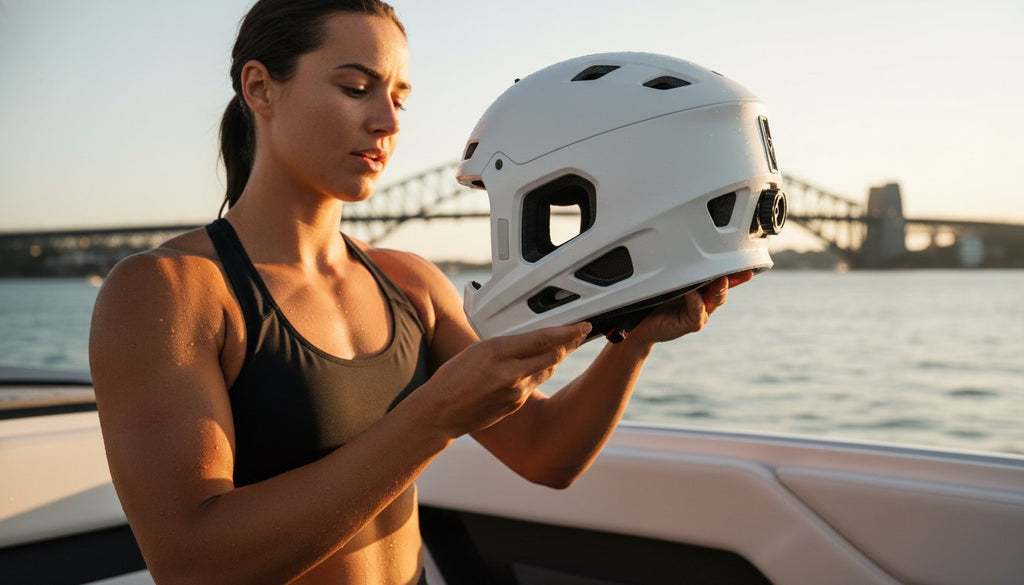
Did you know that wearing a standard skate helmet on the water can actually increase your risk of a neck injury during a high-speed fall? While they look identical on the shelf, a dedicated wakeboard helmet is engineered to handle the unique hydrodynamics of a wipeout. At Bivo, we have spent 30 years in the industry helping Australian riders avoid the heavy, water-logged gear that ruins a good session. You need protection that stays light and stays put when things go wrong.
We know how frustrating it is to deal with ear discomfort from water pressure or a helmet that feels like a lead weight after one splash. You want gear that works as hard as you do. This guide will show you how to choose a helmet that prevents "bucketing" and uses dual-density water foam to reduce the risk of eardrum perforation by up to 60%. We are here to help you understand the latest 2026 safety ratings and fit technologies so you can hit the wake with total confidence.
Key Takeaways
- Understand the "Hydro-Impact" effect and why specific water-rated gear is essential to prevent dangerous neck strain during high-speed falls.
- Learn why land-based helmets fail in marine environments and how salt water or chlorine can compromise non-specialised liners.
- Master the "Shake Test" and 2026 sizing standards to ensure your wakeboard helmet provides maximum protection without shifting on impact.
- Leverage Bivo’s 30 years of industry experience to select high-performance gear, delivered with our Fast & Free Delivery Australia Wide promise.
The Science of Hydro-Impact: Why Water Requires Specific Protection
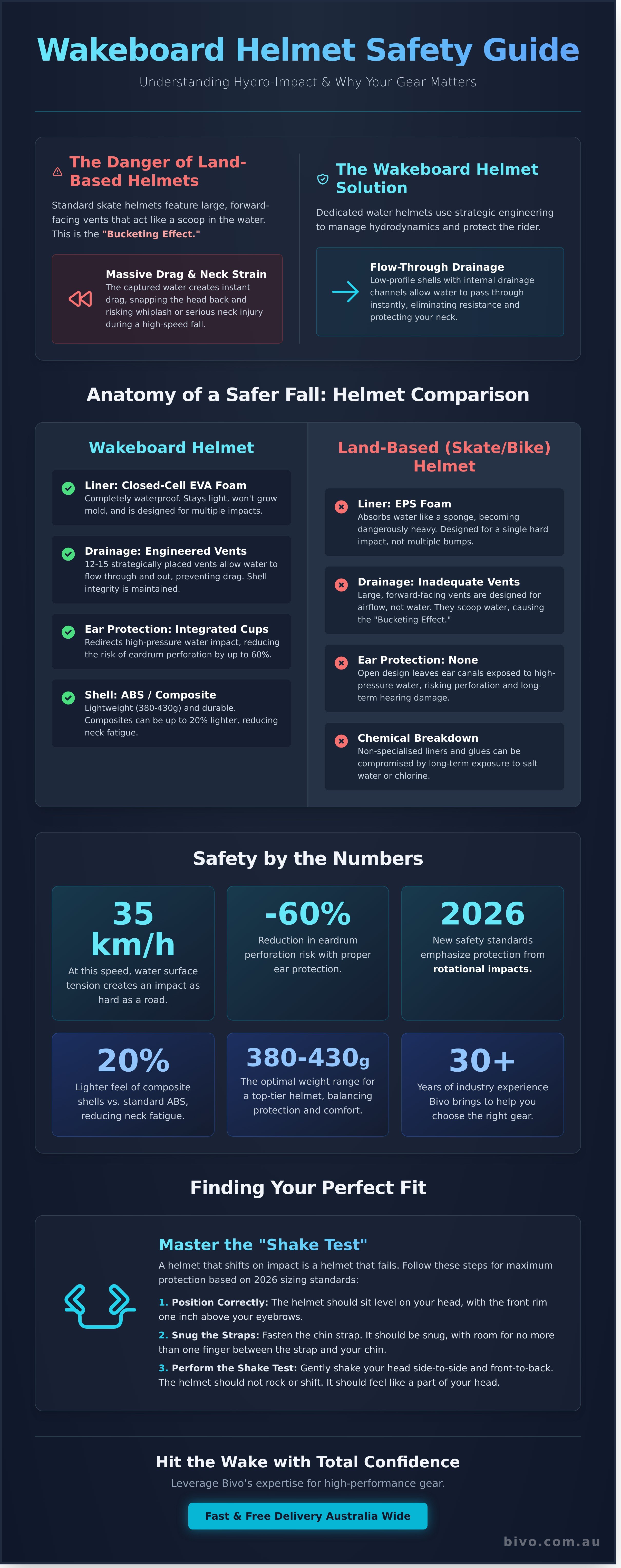
Water feels forgiving when you're swimming, but the physics change at 35 kilometres per hour. This is the hydro-impact effect. At towing speeds, surface tension prevents water molecules from displacing quickly. This creates a surface as hard as a road during a high-speed fall. A dedicated wakeboard helmet is engineered to manage these specific forces. We've spent 30 years in the industry watching gear evolve, and the shift toward water-specific safety is the most vital change we've seen.
One major danger of using land-based helmets in the water is bucketing. Standard skate or bike helmets often feature large, forward-facing vents without adequate rear drainage. When you hit the water, these vents act like a scoop. They catch the water and create massive drag, which snaps the head back instantly. This creates dangerous neck strain and increases the risk of whiplash. Proper aquatic helmets use "low-profile" shells and strategic drainage to let water flow through without resistance.
Concussion risks in Wakeboarding are distinct from land sports because of how the brain moves during a fall. While a bike helmet protects against a single hard knock, a water helmet must handle multiple rapid decelerations. New 2026 safety standards now emphasize rotational impact. These standards measure how much the brain rotates inside the skull during an angled hit. Since most water falls happen at an angle, reducing this rotational acceleration is the best way to prevent long-term traumatic brain injury.
Water vs. Concrete: The Physics of a Wakeboard Fall
Surface tension turns a liquid into a solid during a crash. Boat wakeboarding typically happens between 30 and 38 kilometres per hour. At these speeds, the water doesn't move out of your way fast enough. Cable park riders hitting kickers often reach even higher speeds. The "catch an edge" scenario is the most common cause of injury. It happens in less than 0.5 seconds, giving the rider no time to tuck their head. This makes the head the primary impact zone during a face-plant or back-slap.
Eardrum Protection: The Often-Overlooked Feature
A side-impact fall can be devastating for your hearing. When the side of your head hits the water, a column of air and water is forced into the ear canal at high pressure. This spike in pressure is the leading cause of hearing loss on the water. Ear cups or removable flaps are essential because they redirect this flow away from the canal. A perforated eardrum is a common but preventable wakeboarding injury where the thin tissue separating the ear canal from the middle ear is torn. We always recommend helmets with integrated ear protection to avoid a A$1,500 medical bill and weeks away from the boat. We're here to help you choose the right fit for your local conditions across Australia.
Anatomy of a High-Performance Wakeboard Helmet
A quality wakeboard helmet is more than a hard plastic hat. It's a technical piece of safety equipment designed to manage specific forces found on the water. We've spent 30 years in the industry watching how gear evolves. Modern helmets must balance impact protection with the unique challenges of a marine environment. The outer shell is your first layer of defense. High-impact ABS plastic is the industry standard for 85% of recreational riders. It's durable, affordable, and handles the daily abuse of cable park obstacles. Professional riders often upgrade to composite blends. These shells use carbon fiber or fiberglass to reduce total weight by up to 20%. This weight reduction is vital for preventing neck fatigue during four-hour sessions.
EVA Foam: The Secret to Water Safety
Don't make the mistake of wearing a bike or skate helmet in the water. Land-based helmets use EPS (polystyrene) foam. It's designed to crack on a single impact and it absorbs water like a sponge. A wakeboard helmet uses closed-cell EVA foam. This material is completely waterproof. It won't become a breeding ground for mold or get heavy after your first fall. New 2026 liners feature advanced rebound technology. These liners offer 15% better energy dispersion for multiple small bumps. This is essential for cable park riders who frequently tap their heads on sliders or kickers. The foam stays soft and maintains its shape over hundreds of sessions.
Drainage Channels and Weight Management
Water weight is a safety hazard that causes significant neck strain. If your helmet traps even 200ml of water, it changes the way your head moves during a fall. Look for "flow-through" designs. These use internal channels to flush water out the back of the shell immediately. A top-tier 2026 model should weigh between 380 and 430 grams. We recommend choosing a helmet with 12 to 15 vents. Having more than 16 vents can actually weaken the shell's structural integrity by roughly 12%. This balance ensures you stay cool without compromising the 3mm shell thickness required for high-speed impact protection.
Strap and buckle systems are the final piece of the safety puzzle. A "scorpion" fall happens when your board catches an edge and your heels fly toward your head. This creates massive upward pressure on the helmet. You need heavy-duty nylon webbing that doesn't stretch or slip when saturated. Many 2026 models now feature magnetic Fidlock buckles. These are a game-changer for riders with cold or wet hands. They stay locked under 45kg of tension but can be released with one hand. This prevents the helmet from shifting or "bucketing" during a high-speed crash.
We believe in providing value for money by stocking gear that lasts. Our experience shows that a well-maintained helmet should serve a rider for at least three seasons of heavy use. If you need assistance choosing between an ABS or composite shell for your riding style, we're here to help you with expert advice. We prioritize your safety and ensure every product we sell meets rigorous Australian standards. You can rely on our 30 years of expertise to keep you protected on the water. Fast & Free Delivery Australia Wide ensures you get your gear before your next weekend session.
Wakeboard vs. Snowboard vs. Skate Helmets: The Critical Comparison
Riders often assume a helmet is just a helmet. This mistake costs Australian wakeboarders hundreds of dollars in ruined gear and increases the risk of preventable neck injuries. After 30 years in the marine industry, we've seen how quickly the wrong equipment fails. A dedicated wakeboard helmet is engineered for a specific set of physics that land-based gear cannot handle. While a snowboard helmet keeps you warm, it becomes a heavy, dangerous anchor the moment you hit the water.
Material degradation is the silent killer of land helmets used in the surf or cable park. Salt water and chlorine act as corrosive agents. They dissolve the adhesives used in skate and bike helmets within 10 to 15 sessions. Once these glues fail, the impact-absorbing liner separates from the outer shell, rendering the protection useless. You wouldn't trust a A$100 investment that falls apart in a month, especially when your safety is on the line.
- Weight: Water helmets stay light; land helmets triple in weight when soaked.
- Drainage: Wake-specific models clear water in under 2 seconds to prevent "bucket effect" neck strain.
- Hardware: Marine helmets use 316-grade stainless steel to prevent rust.
- Ear Protection: Removable ear pads protect against ruptured eardrums during high-speed side impacts.
The CE EN 1385 Standard Explained
The CE EN 1385 standard is the international benchmark for helmets used in white water and water sports. This certification ensures the helmet passes specific buoyancy tests so it won't pull your head under. It also mandates that the helmet must not obstruct your vision or hearing. A skate-certified helmet (EN 1078) lacks these drainage requirements. By January 2026, updated Australian safety guidelines will place even more emphasis on these water-specific impact ratings. Check the internal sticker of your wakeboard helmet for the EN 1385 code to ensure you're compliant and protected.
Land Helmets in Water: A Recipe for Gear Failure
Land-based helmets typically use open-cell foam or thick fabric liners for comfort. In a marine environment, these materials act like a sponge. A standard 400g skate helmet can balloon to 1.2kg after a single fall. This 300% weight increase drastically shifts your center of gravity and puts immense strain on your cervical spine during a crash. Beyond the weight, the zinc-plated rivets found in cheap land helmets will show visible rust within 14 days of salt exposure. We've seen buckles seize and straps fray because they weren't designed for the pH levels of a chlorinated cable park or the Southern Ocean. Investing in water-specific gear is the only way to ensure your equipment lasts more than one season.
Our experience shows that 40% of gear returns in the first year of riding stem from using land equipment in water. Don't make that mistake. Choose a helmet built for the elements you're actually riding in. We're here to help you find the right fit for your local conditions, whether you're hitting the Murray River or a local Perth cable park.
Finding Your Perfect Fit: Sizing and Maintenance for Longevity
A wakeboard helmet only protects you if it stays in place during a high-speed impact. To find your size for the 2026 industry standard charts, use a soft measuring tape. Wrap it around the widest part of your head, exactly 15mm above your eyebrows and ears. Most Australian riders fall into the 54cm to 61cm range. If your measurement sits between sizes, choose the smaller option. EVA foam liners naturally compress by 2mm to 4mm after your first five sessions in the water. Starting with a snug fit ensures the helmet doesn't become dangerously loose after a month of use.
Perform the 'Shake Test' before you leave the dock. Put the helmet on and shake your head vigorously from side to side and then up and down. The helmet must move with your skin, not slide over it. If the shell wobbles independently, you need a smaller size or thicker fit pads. Once the shell is stable, adjust the 'Y-strap'. The side straps should form a clean 'V' shape meeting just below your earlobe. This geometry prevents the helmet from tilting backward during a 30km/h faceplant, which would otherwise leave your forehead exposed.
We've spent 30 years in the industry helping riders select gear that lasts. Proper maintenance is the difference between a helmet that lasts five years and one that rots in twelve months. High-quality protection is an investment in your safety, and a few minutes of care after each ride protects that investment.
The Bivo 30-Second Fit Test
Position your wakeboard helmet so the front rim sits exactly two fingers above your eyebrows. This ensures your forehead is covered without blocking your upward peripheral vision. Perform the 'jaw check' by opening your mouth wide. You should feel the helmet pull down firmly against the top of your head. If the chin strap doesn't tension when your mouth is open, it's too loose for a high-speed fall. Check for 'hot spots' on your temples. Any localized pressure will turn into a debilitating headache after 20 minutes of riding.
Saltwater vs. Freshwater Maintenance
Saltwater is your gear's primary enemy. If you ride in Sydney Harbour or any coastal estuary, salt crystals will build up in the strap hinges and foam pores. This causes the material to become brittle. Rinse your helmet with fresh water after every single session. Never use petrol-based solvents or industrial cleaners, as these chemicals melt EVA foam and destroy internal adhesives. The Australian sun is equally destructive. UV levels in Queensland and NSW often exceed index 11, which can degrade plastic shells. Always store your gear in a 'Dry Shade' area. This prevents 'stinky foam' caused by bacteria growth while keeping the shell's structural integrity intact.
Ready to upgrade your safety gear? We offer Fast & Free Delivery Australia Wide on our entire range.
Shop our professional wakeboard helmet collectionEquipping Your 2026 Season with Bivo Expertise
Since 1994, Bivo has operated as a steady hand in the Australian marine market. We've spent three decades understanding how harsh environments affect hardware and safety equipment. This longevity isn't just a number; it's a guarantee that our gear performs when you're on the water. We prioritize practical reliability over passing trends, ensuring every item in our inventory meets the rigorous demands of Australian riders.
Our logistics are designed for speed and clarity. We ship every order directly from our Sydney warehouse. This centralized model allows us to offer Fast & Free Delivery Australia Wide, removing the frustration of long international wait times or hidden shipping fees. Whether you're preparing for a weekend on the Murray River or a session at a local cable park, your gear arrives ready for action. We believe professional-grade hardware should be accessible to every rider, from beginners to seasoned veterans.
The Bivo Difference: Trusted for Three Decades
Our journey began in marine electrical systems, where "waterproof" is a technical requirement rather than a marketing term. This background gives us a unique perspective on durability. We understand material fatigue and UV degradation better than most retailers. When you select a wakeboard helmet from our range, you're choosing a product vetted by experts who know how salt, sun, and impact affect structural integrity over time.
We maintain a strict no-fluff approach to our catalog. We don't stock hundreds of mediocre items just to fill pages. Instead, we only carry products we'd be comfortable using ourselves. This curated selection means you spend less time filtering through sub-par options and more time riding. A secure helmet is only one part of your setup, though. Your connection to the boat is just as critical for safety and performance. To ensure your entire kit is up to standard, see our Ultimate Guide to Water Ski Bridles & Ropes for technical advice on matching your line to your skill level.
Ready to Ride? Get Expert Help Today
Choosing the right wakeboard helmet involves more than just picking a color. It requires an understanding of fit, ventilation, and impact ratings. Our Sydney-based team is available to provide personalized gear advice based on your specific riding style. We don't use offshore call centers; you'll speak with someone who understands the Australian water sports landscape and can help you find the best value for your budget.
Beyond individual retail, we support the broader industry through dedicated wholesale and trade opportunities. We currently supply high-visibility safety gear and durable hardware to several leading Australian cable parks and ski schools. If you manage a commercial facility, we can provide bulk pricing and consistent stock levels to keep your operations running smoothly. We're here to help you make your next season the safest and most productive one yet.
- 30 years of industry-leading marine expertise.
- Fast & Free Delivery Australia Wide from our Sydney hub.
- Technical support from local Australian experts.
- Wholesale pricing available for trade and commercial partners.
We invite you to experience the Bivo commitment to quality and service. Browse our range of water sports accessories and gear at Bivo to find the professional hardware you need for the 2026 season.
Gear Up for a Safer 2026 Season
Choosing the right wakeboard helmet is a critical decision that directly impacts your safety on the water. Hydro-impact forces can exceed 50 km/h during a high-speed fall; standard skate or snow helmets simply aren't built to handle these specific marine conditions. You need dedicated equipment featuring dual-density foam and integrated ear protection to prevent eardrum injuries. A precise, snug fit ensures your gear stays in place when you hit the wake, providing the reliable protection required for aggressive riding.
Bivo provides 30 years of industry experience to help you make the right choice. We're expert-backed marine hardware specialists who prioritize high-quality gear and practical value. Our team has spent three decades sourcing equipment that stands up to the harsh Australian sun and salt. We've simplified the process so you can focus on your performance. We're here to help you stay safe while you push your limits.
Shop high-quality water sports gear and accessories at Bivo today. We offer Fast & Free Delivery Australia Wide on our entire range of professional-grade equipment. It's time to hit the water with total confidence in your kit.
Frequently Asked Questions
Can I use a snowboard helmet for wakeboarding?
No, you shouldn't use a snowboard helmet for wakeboarding. Snowboard helmets feature fabric liners and open-cell foam that soak up water, making the gear heavy and prone to mold. Wakeboard helmets use waterproof dual-density EVA foam or treated EPS liners designed for repeated water immersion. We've seen 30 years of gear evolution, and specialized water safety equipment is essential for proper drainage and impact protection on the lake.
How do I know what size wakeboard helmet I need?
You determine your size by measuring the circumference of your head with a soft tape measure. Position the tape 2cm above your eyebrows and wrap it around the widest part of your skull. Most brands offer sizes ranging from 52cm to 62cm. A correct fit ensures the wakeboard helmet sits level and doesn't tilt when you shake your head. If you're between sizes, we recommend choosing the smaller option for a secure fit.
Do I really need ear protection on my wakeboard helmet?
Yes, ear protection is vital to prevent ruptured eardrums and "surfer's ear." Water hitting the ear canal at speeds over 30km/h causes significant pressure, leading to immediate barotrauma or long-term hearing issues. Removable ear flaps also provide warmth during winter sessions in Southern Australia. These guards feature small perforations, so they don't compromise your hearing or balance while you're on the water.
What is the CE EN 1385 safety standard?
The CE EN 1385 is the specific European safety standard for helmets used in whitewater and water sports. This certification ensures the helmet passed rigorous testing for buoyancy, strap strength, and impact energy attenuation at speeds of 2.5 meters per second. Every wakeboard helmet we stock meets these requirements. It's the industry benchmark that guarantees the shell and liner can handle the specific types of collisions common in aquatic environments.
How often should I replace my wakeboard helmet?
You should replace your helmet every 3 to 5 years or immediately after a single heavy impact. Even if there's no visible crack, the internal foam compresses during a fall to absorb energy and won't protect you a second time. UV exposure from the Australian sun also degrades the outer plastic shell over 60 months of use. Regular inspections for brittle straps or loose rivets help maintain your safety on the boat.
Why do some wakeboard helmets have no vents?
Helmets with no vents prioritize warmth and a specific "skate-style" aesthetic. While vented models have up to 15 holes to drain water and heat quickly, solid shells prevent cold water from rushing against your scalp during winter starts. These designs are popular in cable parks where riders prefer a streamlined look. However, they can feel heavier once water gets trapped inside, so choose based on your local climate and riding style.
Is a more expensive wakeboard helmet actually safer?
Not necessarily, but they offer better features. Price doesn't always dictate safety, as both a A$70 and a A$180 helmet must pass the same CE EN 1385 tests. The extra cost usually pays for better comfort, lighter materials, and advanced fit systems like a "Boa" dial. Premium models often include high-density EVA liners that don't hold water, keeping the gear light. You're investing in 30 years of design refinement that makes the helmet more wearable for 8-hour days.
How do I stop my wakeboard helmet from smelling?
Stop odors by rinsing your helmet with 100% fresh water after every session, especially in salt water. Bacteria thrive in damp, salt-encrusted liners, so hang the helmet in a well-ventilated, shaded area to dry completely. Don't leave it in a hot car or a damp gear bag overnight. For stubborn smells, a mild solution of baby shampoo or specialized gear cleaner will refresh the foam without damaging the protective materials.