

Saltwater, constant vibration, and humidity-the Australian marine environment is relentless. It's also a leading cause of electrical failures on the water, often stemming from one weak link: the wire connection. Using the correct marine grade wire connectors is not just best practice; it's essential for keeping your vessel safe and your systems running reliably, trip after trip.
But with so many options, how do you know you're choosing the right one? What really separates a marine-rated terminal from a standard automotive one? This guide provides the clear, practical answers you need. We'll walk you through everything from understanding tinned copper and heat shrink insulation to selecting the proper crimping tool for a connection that resists corrosion and won’t let you down. Get ready to build waterproof electrical connections with confidence.
Key Takeaways
- Understand why standard automotive connectors are a leading cause of electrical failure on boats and how to avoid costly repairs.
- Learn the three essential features that distinguish genuine marine grade wire connectors from standard alternatives, ensuring a reliable connection.
- Master the correct installation technique to create a fully waterproof and vibration-proof electrical seal that lasts.
- Avoid the common DIY wiring mistakes that can lead to intermittent faults and serious safety hazards on the water.
Why Regular Connectors Fail: The Harsh Realities of the Marine Environment
A boat's electrical system lives a tough life. Unlike the relatively protected wiring inside a car, marine wiring is constantly under attack from saltwater, persistent moisture, and high humidity. This environment is fundamentally hostile to standard electrical components. Using an automotive-style connector on a boat is a recipe for failure. When a connection fails at sea, it's not a minor inconvenience-it could mean losing your navigation lights, bilge pump, or engine controls when you need them most. Safety and reliability depend on every single connection.
The Science of Saltwater Corrosion
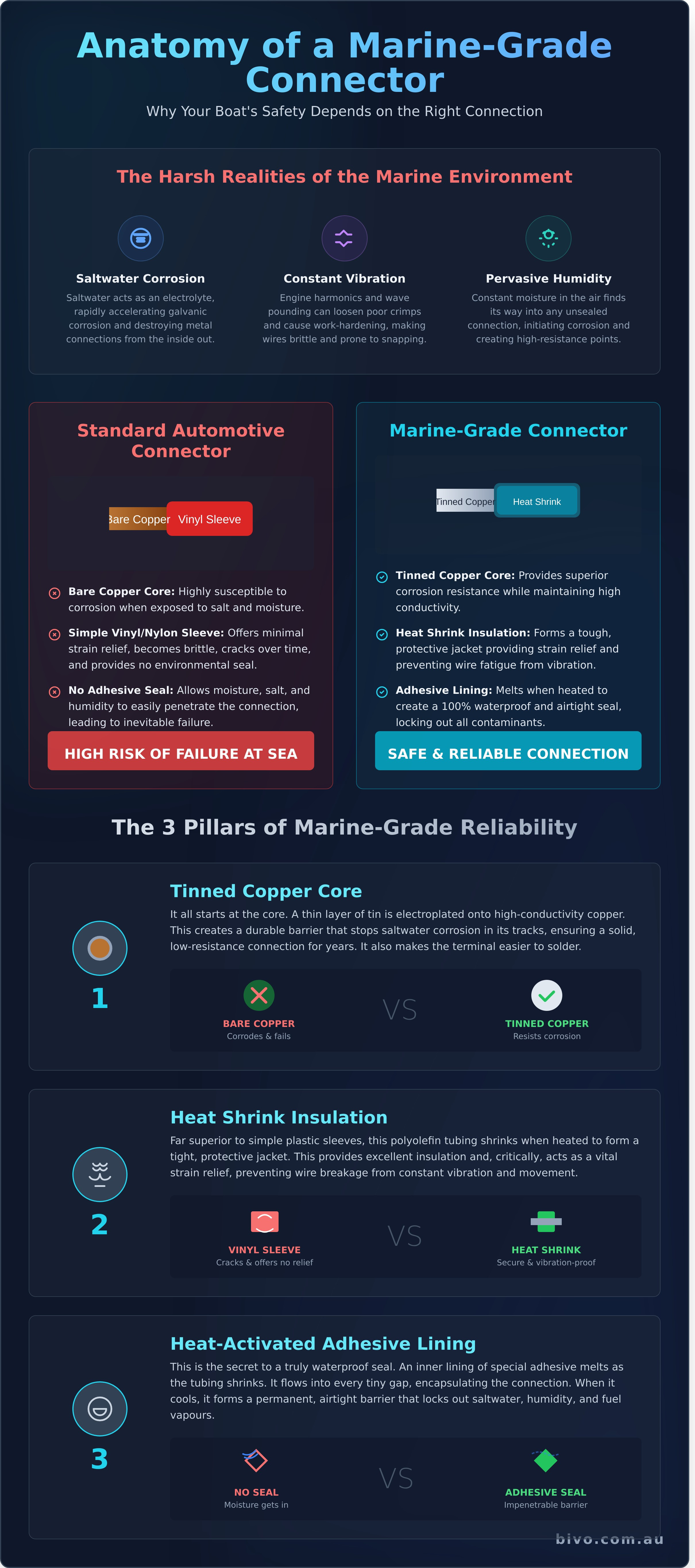
Saltwater is a highly effective electrolyte that dramatically accelerates galvanic corrosion. When moisture finds its way into a standard, unsealed connector, it creates a circuit between the different metals. To understand the fundamental components involved, reviewing Electrical Connector Basics can be helpful. This corrosive process eats away at the metal, creating a high-resistance point. Moisture also wicks up the copper wire strands, causing corrosion from the inside out. The result is a connection that overheats and will eventually fail.
Vibration: The Silent Killer of Connections
Every vessel is subject to constant vibration from engine harmonics and the relentless pounding of waves. This movement can slowly work a poor-quality crimp loose, creating an unreliable and dangerous connection. Furthermore, repeated flexing of the wire where it enters a rigid connector causes work-hardening of the copper strands, making the wire brittle and prone to snapping. Proper marine grade wire connectors are designed to provide essential strain relief and combat this destructive force.
The combined assault of chemical corrosion and mechanical stress means standard connectors simply aren't up to the task. They will fail, and that failure puts your equipment and your safety at risk. This is why purpose-built marine grade wire connectors are not a luxury, but a critical component for any reliable and safe marine electrical system.
What Makes a Wire Connector 'Marine Grade'?
On the water, electrical connections face a constant battle with moisture, salt, and vibration. A standard automotive connector will fail quickly in this environment, leading to frustrating and potentially dangerous electrical faults. True marine grade wire connectors are engineered specifically to overcome these challenges. They are built with three distinct features that work together to create a reliable, long-lasting, and safe connection.
Understanding these features justifies the difference in cost. Investing in quality connectors is an investment in your boat's reliability and your peace of mind.
Material Matters: Tinned Copper vs. Standard Copper
It all starts at the core. Marine connectors use high-conductivity copper for excellent current flow, but with a critical enhancement: tin-plating. This thin layer of tin is electroplated onto the copper, creating a durable barrier. Unlike bare copper, which corrodes and turns green when exposed to salt and moisture, tinned copper offers superior corrosion resistance. This ensures a solid, low-resistance connection for years. As a practical benefit, it also makes the terminal much easier to solder.
The First Line of Defence: Heat Shrink Insulation
The next layer is a robust, high-quality heat shrink tube. This is far superior to the simple vinyl or nylon sleeves found on standard connectors. When heated, this polyolefin tubing shrinks to form a tight, protective jacket around the wire and terminal barrel. This serves two key purposes: it provides excellent insulation against short circuits and acts as a vital strain relief, preventing the wire from breaking due to vibration and movement.
The Secret to a Waterproof Seal: Adhesive Lining
This is the feature that truly sets marine grade wire connectors apart. Inside the heat shrink tubing is a lining of heat-activated adhesive. As you heat the connector to shrink the outer tube, this inner lining melts and flows. It fills any tiny gaps and voids, completely encapsulating the connection. Once it cools, it creates a permanent, waterproof, and airtight seal. This barrier locks out saltwater, humidity, and fuel vapours, protecting the core connection from any external contaminants.
Types of Marine Grade Wire Connectors
Choosing the right connector is crucial for a reliable and safe marine electrical system. A solid connection prevents voltage drops, overheating, and potential failures. This practical overview covers the most common types of marine grade wire connectors, helping you select the correct component for any job on your boat with confidence.
Butt Splices/Joiners: For In-Line Wire Connections
Butt splices are designed to join two wires end-to-end, creating a secure, in-line connection. They are the go-to solution for extending a wire run or repairing a damaged section of cable. While standard joiners connect wires of the same size, step-down versions are available to safely connect a thicker wire to a thinner one.
To ensure you use the right size, these connectors are colour-coded according to the wire gauge (AWG/B&S) they accept:
- Red: For 22-18 AWG wire
- Blue: For 16-14 AWG wire
- Yellow: For 12-10 AWG wire
For the best protection against the harsh marine environment, always choose heat shrink butt splices. They contain an adhesive-lined tubing that seals the connection against moisture and corrosion. View our range of Heat Shrink Butt Joiners.
Ring and Spade Terminals: For Connection to Studs and Bus Bars
When you need to connect a wire to a screw terminal, battery post, or a bus bar, a ring or spade terminal is the correct choice. They provide a secure termination point for your wiring, allowing for easy and reliable power distribution.
- Ring Terminals: These feature a closed loop that fits completely over a stud. The screw or nut must be fully removed for installation, but this design ensures the terminal cannot slip off, making it the most secure and recommended option for critical connections.
- Spade Terminals: Also known as fork terminals, these have a U-shaped opening that can be slipped under a loosened screw head. They are faster to install and remove but are less secure than ring terminals.
When selecting a ring terminal, it is vital to match the terminal's stud size to the diameter of the screw or stud you are connecting to. This guarantees a tight, low-resistance fit.
Solder Seal Wire Connectors: The All-in-One Solution
Solder seal wire connectors offer a modern alternative to traditional crimping. These clever devices consist of a transparent heat shrink tube that contains a pre-measured ring of low-temperature solder and two thermoplastic sealing rings.
When heated with a heat gun, the solder ring melts and flows, creating a strong, soldered electrical bond between the wires. Simultaneously, the outer tubing shrinks and the sealing rings melt, providing a fully waterproof and insulated connection. The main advantage is achieving a superior, sealed joint without a crimp tool. The only downside is that they require careful heat control to ensure the solder flows correctly without overheating the wire. See our Heat Shrink Solder Connectors.
How to Create a Perfect Waterproof Connection: A Step-by-Step Guide
A waterproof connection is more than just joining two wires; it's about creating a durable, corrosion-resistant seal that can withstand the harsh marine environment. Following the correct procedure for installing marine grade wire connectors is not optional-it's essential for the safety and reliability of your vessel's electrical systems. This guide provides the exact steps for a professional-grade installation.
Step 1: Wire Preparation is Key
Success starts before you even touch the connector. First, ensure your wire gauge is appropriate for the electrical load it will carry; using undersized wire is a significant hazard. When you're ready to strip, use a quality wire stripper to make a clean cut without damaging the copper strands. Nicked strands create a weak point and reduce conductivity. The strip length is also critical; it should match the metal barrel length inside the connector, typically around 6-7mm. Too short, and the crimp will be weak. Too long, and you risk exposed wire.
Step 2: The Perfect Crimp (The Most Critical Step)
The mechanical strength of your connection is made in the crimp. Do not use standard pliers. A proper ratchet crimping tool is the only way to guarantee a secure, professional connection. Unlike pliers, a ratchet tool applies uniform pressure and will not release until a full compression cycle is complete. This creates a cold weld between the wire and the connector barrel. After crimping, perform a gentle 'pull test'. The wire should not budge. If it does, cut the connector off and start again. A reliable job starts with a quality Ratchet Crimp Tool.
Step 3: Activating the Heat Shrink Seal
The final step is to create the waterproof barrier. Use a heat gun, not a lighter or a torch, which can easily burn the tubing and damage the wire. Begin heating the middle of the connector and slowly work your way to the ends. This technique pushes any trapped air out, ensuring a complete seal. You'll know the seal is active when you see the clear adhesive lining melt and flow out slightly at the edges of the tubing. Keep the heat gun moving constantly to apply even heat and be careful not to overheat, as this can compromise the integrity of the heat shrink.
Common Mistakes to Avoid When Wiring Your Boat
With over 30 years in the marine industry, we've seen firsthand how small mistakes can lead to big problems on the water. Proper installation is just as critical as using high-quality marine grade wire connectors. To ensure your electrical system is safe and reliable, avoid these common DIY errors.
Mistake #1: Using the Wrong Tools
Using pliers or a hammer-style crimper is the fastest way to create a failed connection. These tools crush the connector instead of creating a uniform, cold weld. This results in a weak crimp with high electrical resistance, which can lead to heat buildup and eventual failure. Always use a dedicated ratcheting crimper. Likewise, use a proper wire stripper instead of a knife to avoid nicking the copper strands, which compromises the wire's strength.
Mistake #2: Mismatched Wire and Connector Sizes
A secure connection depends on a perfect fit. If the connector is too large for the wire, the crimp will be loose and the wire can easily pull out. If it's too small, you risk damaging the wire strands when inserting them. Always check the gauge (AWG/B&S) printed on your wire's insulation and match it to the connector. The standard colour code makes this simple:
- Red: For 22-16 AWG wire
- Blue: For 16-14 AWG wire
- Yellow: For 12-10 AWG wire
Mistake #3: Improper Heat Application
When sealing heat shrink connectors, never use a lighter or a torch. An open flame is too intense, creating soot that can compromise the seal and risk burning the tubing. Use a quality heat gun and apply heat evenly. Continuously rotate the wire as you work, starting from the middle of the connector and moving outwards. This ensures the adhesive lining melts uniformly, creating a complete, waterproof seal that protects your connection from the harsh marine environment.
Taking the time to get these details right ensures your boat's electrical system will perform safely for years to come. For the right tools and a complete range of professional marine grade wire connectors, we're here to help. You can find everything you need at bivo.com.au.
Protect Your Investment with the Right Connections
Your boat's electrical system is only as strong as its weakest link. The harsh Australian marine environment demands more than standard hardware, where corrosion and moisture can quickly lead to failure. The key to a reliable and safe system lies in using the correct installation techniques and choosing components specifically designed for the job.
Investing in high-quality marine grade wire connectors is the most effective way to create durable, waterproof seals that protect your vessel's critical systems for years to come.
As a 100% Australian owned business with over 30 years of industry experience, BIVO is a safe pair of hands for your marine electrical needs. We're here to help you get it right the first time. Shop our full range of professional marine grade connectors today and enjoy Fast & Free Delivery Australia Wide.
Wire it right, and enjoy the peace of mind that comes with a job well done.
Frequently Asked Questions
Can I use automotive wire connectors on my boat?
We strongly advise against using automotive connectors on a boat. Standard automotive connectors are not designed for the harsh marine environment and lack the necessary corrosion resistance. They will fail when exposed to moisture and salt, leading to unreliable circuits and potential safety hazards. Always use connectors made from tinned copper with adhesive-lined heat shrink to ensure a durable, sealed, and safe connection on the water.
What is the difference between a marine crimp connector and a solder seal connector?
A marine crimp connector relies on a strong mechanical bond, formed when a crimping tool compresses the terminal onto the wire. A solder seal connector contains a ring of solder inside the heat-shrink tubing. When heated, the solder melts to create a soldered connection while the tubing shrinks and its adhesive lining creates a complete waterproof seal. Both are effective, but solder seal connectors offer an all-in-one connection and seal.
How do I know what size (gauge) connector to use for my wire?
The connector size must match your wire’s gauge, measured in AWG (American Wire Gauge). Using the wrong size creates a poor connection that can fail or overheat. Marine connectors are colour-coded for easy matching: red for 22-18 AWG, blue for 16-14 AWG, and yellow for 12-10 AWG. Check the gauge printed on your wire's insulation and select the corresponding connector for a secure and reliable fit.
Do I really need a special ratchet crimping tool?
Yes, we highly recommend a ratchet crimping tool for the best results. Unlike basic pliers, a ratchet tool applies precise, uniform pressure and will not release until the crimp is complete. This prevents weak connections from under-crimping and damage from over-crimping. Investing in the proper tool is essential for building a safe and reliable marine electrical system that you can trust for years to come.
How long should marine grade wire connectors last?
When installed correctly, high-quality marine grade wire connectors are designed to last for many years, often for the entire service life of the circuit. Longevity depends on two factors: the quality of the connector and the quality of the installation. A proper crimp and a complete heat seal protect the connection from moisture, vibration, and corrosion, ensuring a secure and durable electrical system on your vessel.
Are BIVO's connectors suitable for use below the waterline?
Yes, our adhesive-lined heat shrink connectors are fully waterproof and submersible, making them ideal for use below the waterline. When heated properly, the inner adhesive lining melts and flows to create a complete environmental seal that locks out all moisture. This makes them the perfect choice for critical systems like bilge pumps, transducers, and livewell pumps where a dependable, waterproof connection is absolutely essential.