

Watching your tow rope drift dangerously close to the propeller is a quick way to ruin a perfect day on the water. It’s a common concern for boat owners, along with the worry of damaging the motor or transom with an improper towing setup. Choosing the right outboard motor water ski bridle can seem complex-what do pulleys and floats really do, and what strength rating is necessary? An incorrect choice not only provides a poor experience for the skier but also puts your valuable investment at risk.
Getting it right is simple when you know what to look for. In this guide, we draw on our 30 years of industry experience to give you clear, practical advice. We'll show you exactly how to achieve a smooth, consistent pull, keep your rope clear of the motor, and protect your boat. You will gain the confidence to select the perfect equipment, ensuring every trip is safe, fun, and worry-free.
Key Takeaways
- Assess the key components-rope, float, and hooks-to determine the quality and durability of a bridle before you buy.
- Learn a simple measurement technique to guarantee your new bridle fits your boat’s beam perfectly, preventing damage and poor performance.
- Understand why a correctly installed outboard motor water ski bridle is essential for protecting your engine and providing a balanced pull for skiers.
- Follow simple post-use care steps to significantly extend the life of your bridle and protect your investment.
What is an Outboard Ski Bridle and Why is it Essential?
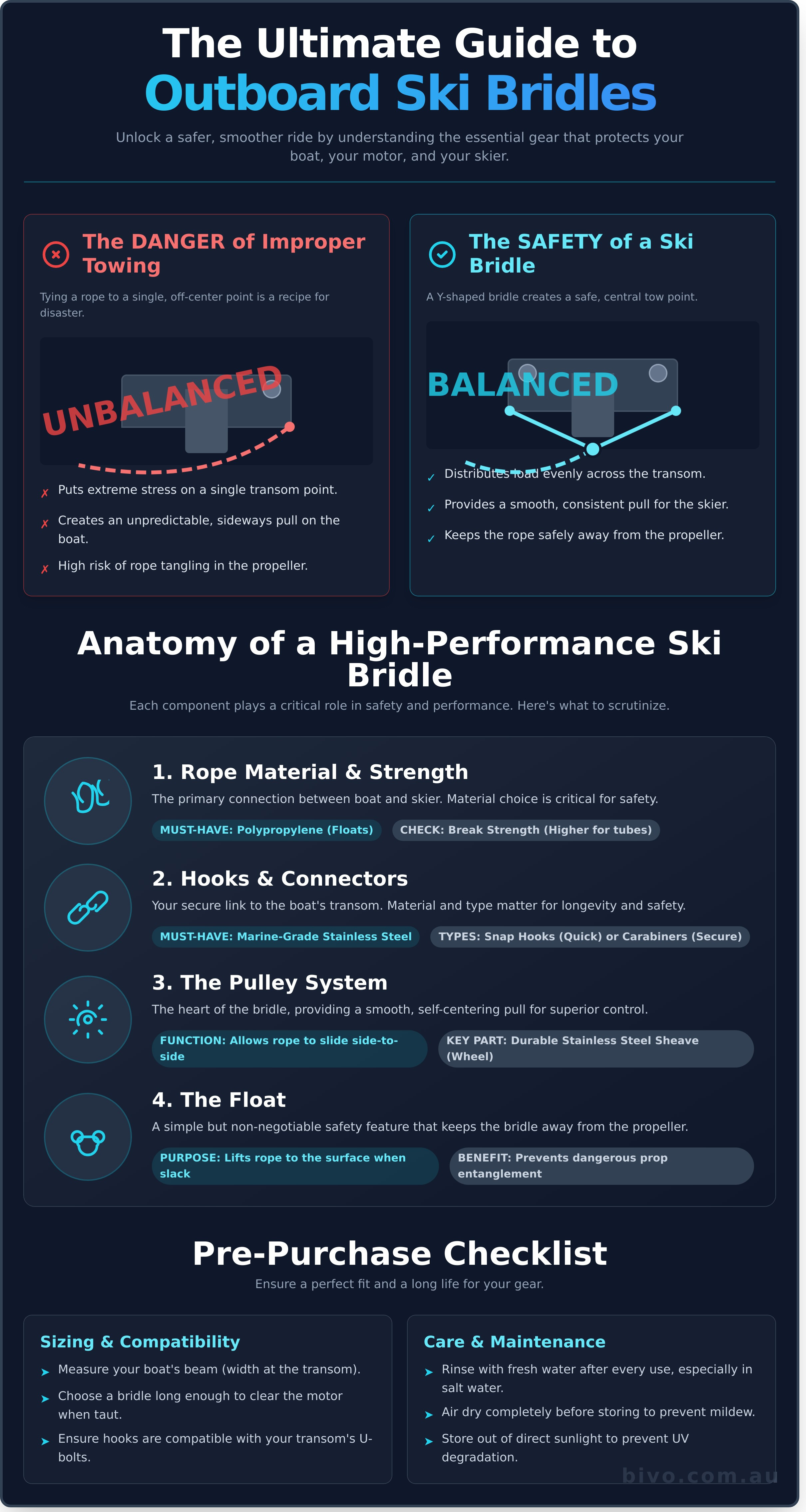
An outboard ski bridle is a Y-shaped rope system designed for one crucial purpose: to create a safe, central tow point behind your boat's outboard motor. It connects to two secure points on your boat’s transom, allowing the main ski rope to travel freely from side to side. This simple piece of equipment is not an optional extra; for any boat without a dedicated ski pylon or tower, a quality outboard motor water ski bridle is essential for safe and effective towing.
Since the early days in the history of water skiing, proper towing technique has been critical for both safety and performance. Attempting to tow a skier by tying a rope directly to one side of the transom is a common but dangerous mistake. This method creates an unbalanced force that compromises control, puts extreme stress on your boat, and poses a significant risk to the skier.
The Dangers of Improper Tow Points
Using a single, off-centre cleat or transom eye as a tow point is a recipe for trouble. An unbalanced pull yanks the stern sideways, making the boat difficult to steer in a straight line and unpredictable in turns. It also places the entire load on a single fitting not designed for the sudden, heavy forces of a water skier. Most critically, it allows the rope to sag into the water near the engine, creating a serious risk of it tangling in the propeller.
Key Benefits for Skiers and Your Boat
A proper outboard motor water ski bridle distributes the towing force evenly across your boat's transom. This simple change delivers immediate and significant advantages for everyone involved. The driver will notice more stable and predictable handling, while the boat is protected from potential damage to its hardware. For the skier, the result is a much smoother and more consistent pull, which makes getting up easier and provides better stability when crossing the wake and making turns.
In summary, the core benefits are clear:
- Improved Safety: Keeps the rope away from the propeller and prevents dangerous, unbalanced pulling forces.
- Better Performance: Provides the skier with a consistent, centred pull for superior control and a better ride.
- Equipment Protection: Distributes the load evenly across two transom points, preventing stress fractures and hardware failure.
Anatomy of a Ski Bridle: Key Features to Scrutinise
Understanding the components of an outboard motor water ski bridle is essential for making a safe and practical purchase. A quality bridle is more than just a rope; it's a system where each part plays a critical role in performance and safety. Investing in high-grade materials is non-negotiable, as equipment failure on the water can have serious consequences. Always ensure your setup aligns with established towed water sports safety guidelines for a secure and enjoyable day.
A typical outboard motor water ski bridle consists of four key components working together.
Rope Material and Break Strength
The rope itself is your primary connection. We recommend bridles made from polypropylene, as this material floats, reducing the risk of it snagging on your propeller. Check the break strength, which is rated in kilograms (kg) or pounds (lbs). For a single skier, a standard rating is sufficient. However, for pulling heavier loads like large, multi-person tubes, you must select a bridle with a higher break strength to handle the increased force.
Hooks and Connectors: The Link to Your Boat
These are the attachment points to your boat’s transom. Insist on marine-grade stainless steel to prevent rust and corrosion, especially in saltwater environments. You will typically find either snap hooks or locking carabiners. Snap hooks are quick to attach, while carabiners offer a more secure, lockable connection. Before you buy, always check that the hooks are compatible with your boat's transom U-bolts or ski hooks.
The Pulley System: The Secret to a Smooth Ride
The pulley is the heart of a high-performance bridle. It allows the tow rope to slide from side to side, automatically centring the pulling force behind the boat. This self-centring action provides the skier or rider with a smooth, consistent pull as they cut across the wake and make turns. A quality pulley features a durable stainless steel sheave (the inner wheel) for reliable, long-lasting operation.
The Float: A Simple but Critical Safety Feature
This small, buoyant part serves one crucial purpose: to keep the bridle rope on the surface and away from your propeller. When the line goes slack-for example, when a skier falls or the boat slows down-the float lifts the V-section of the bridle to the surface. For maximum safety, choose a bridle with a brightly coloured float that is easy for the driver and other boaters to spot in the water.
Sizing and Compatibility: Getting the Perfect Fit for Your Boat
One of the most common questions we hear is, "Will this bridle fit my boat?" The answer depends on two key factors: your boat's beam width and your motor's size. Getting the right size is not just about convenience; it's a critical safety step. A correctly sized outboard motor water ski bridle ensures the tow rope stays clear of your propeller and provides a stable pulling point. This is a fundamental part of learning how to retrofit a boat for towsports safely and effectively.
How to Measure Your Boat for a Bridle
Finding the right length is straightforward. The goal is to select a bridle that is wider than your motor and transom attachments, allowing the float to keep the rope away from the propeller, even when the boat is stationary. Follow these simple steps:
- Measure the distance: Use a tape measure to find the straight-line distance between the two transom tie-down points (or D-rings) where you will attach the bridle hooks.
- Account for the motor: The bridle's "V" shape must be long enough to comfortably clear your outboard motor, even when it is fully tilted up. As a general rule, the bridle's total length should be significantly greater than the measurement between your tie-down points.
Common bridle lengths like 2.2M are suitable for most trailer boats with a single outboard. Larger boats or those with wider beams may require a longer 3.6M bridle to ensure adequate clearance.
Matching the Bridle to the Activity
Choosing the right outboard motor water ski bridle also depends on what you plan to tow. The forces generated by different water sports vary greatly.
For a single water skier, wakeboarder, or kneeboarder, a standard-duty bridle is often sufficient. These activities involve a relatively consistent and direct pull. However, towing large, multi-person inflatable tubes creates immense and unpredictable drag, especially during turns. This high-stress situation demands a heavy-duty bridle with a higher break strength to handle the shock loads safely.
For value and versatility, investing in one high-quality, heavy-duty bridle is often the best choice. It provides peace of mind and can safely handle everything from a single skier to the largest towable tube. With over 30 years of experience, we know what works on the water.
View our heavy-duty 2.2M Outboard Bridle.
Correct Installation and Safe Use: A Step-by-Step Guide
A quality outboard motor water ski bridle is a simple but critical piece of towing equipment. Correct installation is essential for both safety and performance on the water. With over 30 years in the marine industry, we know that taking a few minutes to get the setup right prevents costly mistakes and ensures a better experience for the skier or rider. Follow these straightforward steps for a secure and reliable connection every time.
Step-by-Step Installation
Properly rigging your bridle is a quick, four-step process. Always perform this check before starting your engine.
- Attach the Hooks: Securely clip each end of the bridle to the transom U-bolts or tie-down points on either side of your outboard motor. Ensure the spring clips are fully closed.
- Check Clearance: Confirm the bridle rope passes behind the outboard motor with enough slack. It must not interfere with the motor's steering or tilting functions.
- Connect the Tow Rope: Attach your main ski or tube rope to the bridle's pulley or float. The pulley allows the rope to slide, keeping the pull centred behind the boat.
- Final Inspection: Give every connection a firm tug. Double-check that all clips are secure and the rope is not twisted or caught on any part of the motor or boat.
Pre-Tow Safety Checklist
Before each use, run through this quick inspection. It only takes a moment and is the best way to catch wear and tear before it becomes a problem.
- Rope Condition: Inspect the bridle and tow rope for any signs of fraying, sun damage (fading or stiffness), or knots. A compromised rope must be replaced.
- Hardware Integrity: Check the metal hooks for corrosion or bending. The spring-loaded safety clips should snap back firmly into place.
- Pulley Function: Ensure the pulley wheel spins freely on its axle. A stuck pulley will not centre the rope correctly, leading to poor boat handling.
Common Mistakes to Avoid
Avoid these common setup errors to protect your boat, your equipment, and your passengers. Attaching the bridle to the wrong point is the most frequent and dangerous mistake.
- Never use a ski pylon or wakeboard tower. These are not designed to handle the side-to-side forces of a bridle and can be damaged.
- Do not attach to standard boat cleats or grab rails. Most are not rated to withstand the sudden, heavy loads generated by watersports towing.
- Always check motor tilt clearance. When tilting your motor up in shallow water, ensure the bridle does not become snagged or stretched.
If you have any questions about choosing or using an outboard motor water ski bridle, our team is here to help. View our complete range of quality marine accessories to find the right gear for your boat.
Care and Maintenance: Extending the Life of Your Bridle
Purchasing a quality bridle is an investment in your safety and enjoyment on the water. At Bivo, we believe our responsibility extends beyond the sale. Proper care is straightforward and ensures your equipment performs reliably for seasons to come. A few simple steps can prevent premature wear and tear, protecting both your gear and your passengers.
Think of your bridle like any other piece of critical safety equipment. Regular inspection isn't just good practice-it's essential.
Post-Use Best Practices
A little care after each trip makes a significant difference. Follow these simple guidelines to maximise the lifespan of your outboard motor water ski bridle.
- Rinse with Fresh Water: Always rinse your bridle thoroughly after use, especially in saltwater. Salt crystals are abrasive and can accelerate rope wear and corrode metal hooks.
- Dry Completely: Hang your bridle in a shaded, well-ventilated area to dry completely before storing. This prevents mould, mildew, and rot, which can weaken the rope fibres.
- Store Away from Sunlight: UV radiation is a primary cause of rope degradation. Store your dry bridle in a gear bag or locker, away from direct sunlight, to maintain its strength and integrity.
When to Retire Your Bridle
Knowing when to replace your equipment is crucial for safety. A failed bridle can cause serious accidents. Immediately retire your bridle if you notice any of the following signs of fatigue or damage.
- Rope Damage: Inspect the rope for significant fraying, cuts, or sections that feel stiff or look discoloured. Any visible damage compromises its load-bearing capacity.
- Hardware Failure: Check that the hooks are not bent, rusted, or showing signs of stress. Ensure any safety clips or gates function correctly and close securely.
- Preventative Replacement: Even without obvious damage, the materials in an outboard motor water ski bridle degrade over time. We recommend considering a replacement every few seasons as a proactive safety measure.
If your inspection reveals any signs of wear, it's time for a replacement. Don't take chances on the water. Shop our range of quality replacement bridles today.
Secure Your Tow: Choosing the Right Ski Bridle
Selecting the right equipment is the first step towards a safe and exhilarating day on the water. As we've covered, choosing a ski bridle is about understanding the key features, from the pulley system to the float and hook design. Getting the sizing right for your boat's width and engine setup is critical for performance. By following the correct installation steps and committing to regular maintenance, you ensure your outboard motor water ski bridle remains a reliable and safe piece of gear for years to come.
At Bivo, we stake our reputation on quality and experience. With over 30 years in the marine industry, our Australian-owned and operated team in Sydney knows what works. We've curated a selection of durable, reliable bridles to suit a range of vessels. Find the right bridle for your boat with our quality-tested selection. Plus, enjoy Fast & Free Delivery Australia Wide on all orders.
Gear up with confidence and get ready for a perfect pull every time.
Frequently Asked Questions
Can I use an outboard ski bridle for a large, multi-person inflatable tube?
We strongly advise against it. Large inflatable tubes create immense drag, far exceeding the load of a single water skier. Standard ski bridles are not rated for this force and can snap, risking injury and damage. For towing large, multi-person tubes, you must use a heavy-duty tow harness specifically designed and rated for the significant drag and number of riders. Always check the product's weight and force capacity before use.
What is the difference between an outboard bridle and a V-shaped tow harness?
These terms are often used to describe the same piece of equipment. An outboard bridle is a specific type of V-shaped tow harness designed to connect to two points on your boat’s transom, creating a single tow point that clears the outboard motor. While "tow harness" is a broader term, when discussing towing skiers behind an outboard, the correct item is an outboard motor water ski bridle. Its function is always to create a safe, central pulling point.
How do I know if my boat has the right attachment points (transom eyes)?
Look at the back of your boat (the transom) on either side of the outboard motor. You should find two sturdy, U-shaped metal rings, often called transom eyes or ski-tow eyes. For safety, these must be through-bolted with a backing plate on the inside of the transom, not just screwed into the fibreglass. Before attaching a bridle, always inspect them for signs of corrosion, stress cracks, or looseness. Secure attachment points are critical for safe towing.
Will a correctly installed ski bridle damage my outboard motor?
No, a correctly installed and used ski bridle is designed to protect your motor. The bridle attaches to the boat’s transom, distributing the towing force directly to the boat’s structure, not the motor. The V-shape and central float are specifically designed to keep the tow rope up and away from the propeller during use. Always ensure the rope is clear of the motor before accelerating and during turns to prevent any chance of entanglement.
How often should I replace my water ski bridle, even if it looks okay?
For safety, we recommend a thorough inspection at the start of every season and replacement every 2-3 years, depending on use. Australia's harsh sun causes UV degradation, which weakens the rope fibres even if they don't look frayed. Check for fading, stiffness, broken strands, and any corrosion on the clips or pulley. A bridle is a small safety investment; replacing it proactively provides peace of mind and prevents a failure on the water.
Is a bridle with a pulley really better than one without?
Yes, a bridle with a self-centering pulley is significantly better for performance. The pulley allows the tow rope to slide smoothly from side to side as the skier or wakeboarder cuts across the wake. This provides a much more consistent and responsive pull, improving the rider's control. A bridle without a pulley creates a fixed V, which can jerk the rider and place uneven strain on your boat's transom eyes. A pulley is a key feature for a quality experience.