

A standard ski rope will fail under the weight of a three-person tube, and the resulting snap-back can reach speeds over 100km/h. You want your family to enjoy their time on the water without the constant worry of gear failure. It's frustrating when a new rope frays after just two trips because it wasn't rated for the job or the harsh Australian UV index. Knowing how to choose a tow rope for tubing is the single most important factor for a safe afternoon on the boat. We understand that you want gear that lasts more than one season in the sun.
At Bivo, we've spent 30 years testing marine gear to ensure your setup remains reliable and durable. We'll show you how to select the right tensile strength for 1 to 4 riders and which materials actually survive 40-degree summers. This guide covers everything from rider capacity to the specific attachments your boat needs for a secure connection. You'll learn how to match your rope to your specific tube size so you can hit the water with total confidence and provide a safe experience for every passenger.
Key Takeaways
- Understand the critical safety differences between standard ski ropes and high-break strength tubing ropes designed to handle high-drag inflatables.
- Learn how to choose a tow rope for tubing by matching WSIA-standard tensile strength to your total rider weight and tube capacity.
- Find the ideal rope length between 15 and 18 metres to balance rider safety with the perfect "whip" effect during high-speed turns.
- Determine if your boat setup requires a specialized bridle or quick-connect harness to ensure centered towing and protect your outboard motor.
- Discover practical maintenance techniques to prevent salt-crystal abrasion and ensure your gear remains reliable for years of Australian conditions.
Understanding Why Tubing Ropes Are Different
A tubing rope isn't a standard piece of cordage. It's a specialized tool engineered for the high-drag environment of recreational tubing. Unlike a water skier who cuts through the wake, an inflatable tube acts like a massive anchor. It creates significant resistance against the water surface due to its large surface area. Understanding how to choose a tow rope for tubing starts with recognizing that these loads are far higher than what a standard ski rope can handle.
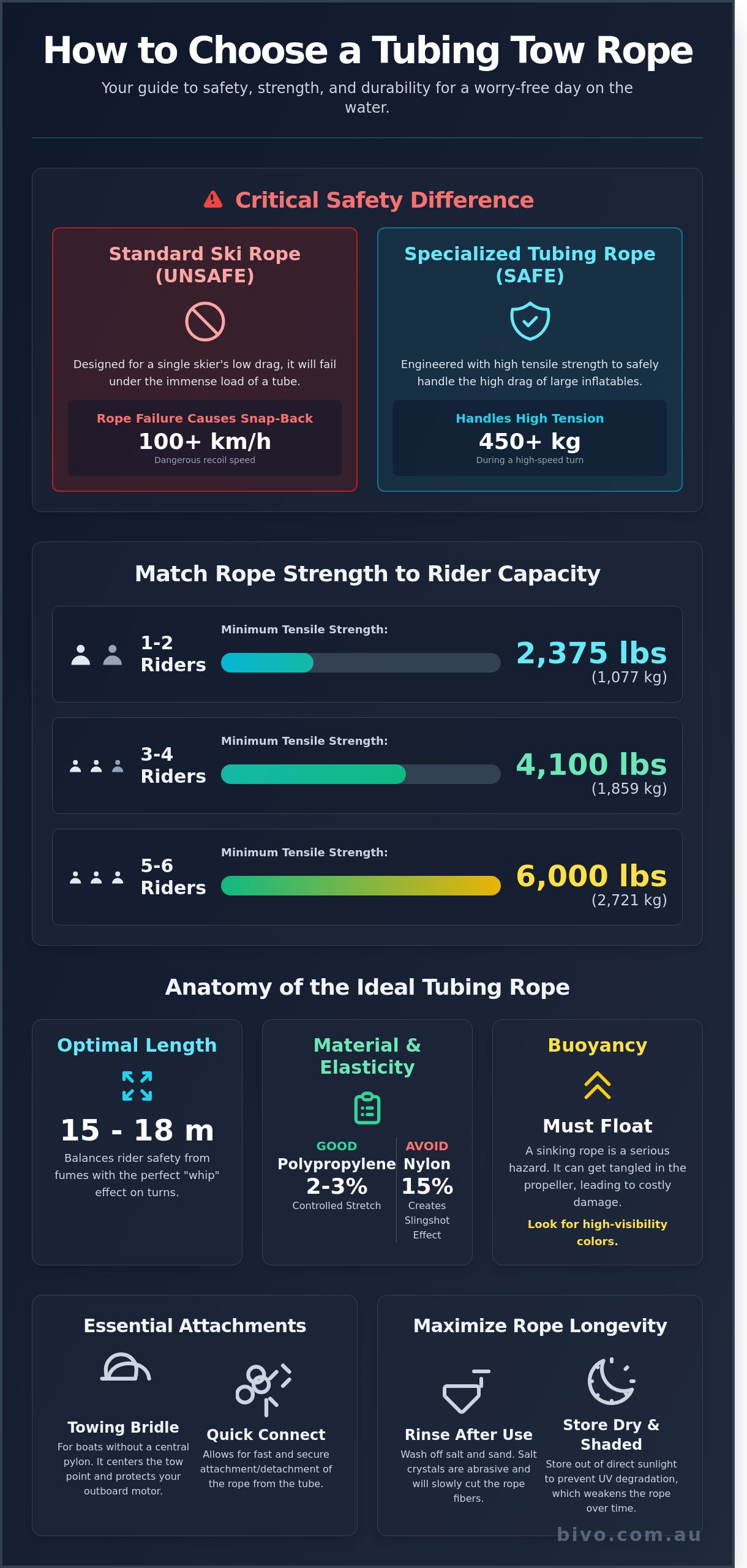
The danger of using a standard water ski rope for a tube is real. A 3-person tube can exert over 450kg of tension during a high-speed turn. Most standard ski ropes are rated for a single rider weighing 100kg. Using the wrong equipment leads to rope failure. Worse, it can cause "slingshotting." This happens when a high-stretch rope acts like a rubber band. If the tube catches a wave, the rope stretches and then snaps the tube forward at speeds exceeding 50km/h. This leads to whiplash or dangerous collisions. Bivo has spent 30 years in the industry seeing the results of poor equipment choices. We prioritize low-stretch ropes to keep your riders safe.
The Role of Rope Elasticity
A quality tubing rope needs a specific amount of "give" to protect your boat's tow point. While you want to avoid the slingshot effect, a rope with 0% stretch would rip the cleats right off your deck. Polypropylene is the industry standard because it offers a controlled 2% to 3% stretch. Nylon is generally avoided for tubing because it stretches up to 15%, which is too much for heavy inflatables. New 2026 manufacturing standards for multi-rider ropes now prioritize shock absorption. These ropes use a specific weave to dampen the "jerk" on the boat without storing dangerous kinetic energy.
Floating vs. Sinking Ropes
Your rope must float. A sinking line is a magnet for your propeller. Propeller entanglement often results in A$1,500 repair bills and a ruined weekend. High-visibility weaves in bright orange or lime green are essential for safety. This is especially true in high-traffic areas like Sydney Harbour, where choppy water makes a dark rope invisible to other boaters. We recommend ropes with integrated foam floats near the attachments. This keeps the heavy metal clips away from your hull and ensures the line stays on the surface during rider pickups. When you're learning how to choose a tow rope for tubing, never compromise on buoyancy.
Our team is here to help you select the right gear for your specific boat and tube setup. With 30 years of experience, we provide practical advice that keeps your family safe on the water. We offer Fast & Free Delivery Australia Wide to get you back on the water sooner.
Determining the Right Tensile Strength for Your Riders
Tensile strength is the most critical factor for safety on the water. It measures the maximum load a rope can handle before it snaps. Bivo has spent 30 years in the industry, and we've seen that most rope failures happen because the user underestimated the force of water resistance. Understanding these ratings is the most technical part of how to choose a tow rope for tubing properly. You aren't just pulling the weight of the riders; you're fighting the drag of the tube and the weight of the water it displaces.
The Water Sports Industry Association (WSIA) sets the global benchmarks for these products. These standards exist to prevent gear failure during high-stress maneuvers. You must account for "shock loading" during your sessions. This occurs when the rope goes slack during a sharp turn and then suddenly snaps tight as the boat accelerates. This event can double the actual force on your rope in less than a second. When you're safely towing tubes, always round up your strength requirements. If your total rider weight is near the limit, move to the next rope grade immediately.
Rider Capacity vs. Break Strength
Your rope must match the maximum capacity of the tube you're pulling. Don't use a light-duty rope for a large tube, even if only one person is riding it at the time. The tube's surface area creates its own massive drag. This data is essential for anyone learning how to choose a tow rope for tubing for the first time:
- 1-2 Riders: Use a rope with a 2,375 lbs (1,077 kg) minimum tensile strength.
- 3-4 Riders: Use a rope with a 4,100 lbs (1,859 kg) minimum tensile strength.
- 5-6 Riders: Use a rope with a 6,000 lbs (2,721 kg) tensile strength for heavy-duty commercial-grade tubes.
The "Weakest Link" Principle
Your towing system is only as strong as its weakest component. Before buying a heavy-duty 6,000 lb rope, check your boat's tow eye capacity. Using a rope with excessive tensile strength can rip light-duty cleats or tow eyes right out of the fiberglass if the tube gets submerged. It's better for the rope to snap than for your boat's transom to sustain structural damage.
Australian boaties should look for the 2026 rating labels on all marine hardware. These updated standards provide clear Working Load Limits (WLL) for modern vessels. If your hardware is older or lacks a rating, stick to the manufacturer's original towing recommendations. Our specialist team is here to help you match your rope to your boat's specific hardware to ensure a safe day on the bay.
Optimising Tubing Rope Length and Material
Selecting the correct length and material is a critical step when learning how to choose a tow rope for tubing. Most recreational setups perform best with a rope between 50 and 60 feet (15-18m). This distance provides a safety buffer while giving the rider enough room to enjoy the ride. Bivo has supplied Australian boaters for 30 years, and we've found that this specific range balances boat control with rider excitement.
Finding the Perfect Tubing Rope Length
Ropes shorter than 50 feet are dangerous. They position the tube rider too close to the boat's transom, increasing the risk of inhaling carbon monoxide fumes from the engine exhaust. A 60-foot line allows the tube to swing wide during high-speed turns. This creates the "whip" effect, where centrifugal force sends the rider flying across the wake at speeds much faster than the boat itself.
Managing rope slack is a vital skill for the boat driver. If the rope goes limp, don't pin the throttle immediately. This creates a snap load that can exceed 1,000kg of force, potentially snapping the line or ripping the tow point off the tube. Smooth acceleration is the key to longevity. A 15-18m rope gives the driver more time to react to changes in tension compared to shorter, jerkier lines.
- 50 feet (15m): Best for small lakes or crowded waterways where tight turns are necessary.
- 60 feet (18m): The standard for most Australian coastal conditions and open water.
- Safety Minimum: Never use a rope under 50 feet for any motorised towing activity.
Weathering the Australian Sun
Sydney’s high-salt environments and 40-degree summer days are brutal on marine gear. UV rays degrade synthetic fibres quickly, leading to "chalking" and eventual snapping. Understanding material science is part of knowing how to choose a tow rope for tubing that lasts more than one season. Polypropylene is the industry favorite because it floats. This buoyancy keeps the line away from your propeller during pick-ups.
For those requiring maximum durability, learn more about double braid polyester marine rope. While polyester doesn't float like polypropylene, it offers superior UV resistance and very low stretch. Most Bivo customers opt for UV-stabilised polypropylene for its practical benefits. It's lightweight, easy to coiled, and stays visible on the water surface. Always rinse your rope with fresh water after a day in the salt to prevent salt crystals from cutting the internal fibres.
Pro Tip: Check your rope for frays or "fuzziness" before every trip. If the material feels brittle or the colour has faded significantly, the UV damage has compromised the break strength.
Essential Attachments: Bridles, Harnesses, and Quick Connects
Selecting the right connection hardware is just as critical as the line itself. When you're learning how to choose a tow rope for tubing, you must consider how that rope interacts with your boat's specific configuration. A direct connection isn't always possible or safe, especially with modern outboard setups. High-quality attachments ensure the load is distributed correctly across your hull.
Using a Water Ski Bridle with Outboards
Outboard motors occupy the center of the transom, which prevents a single central tow point. A water ski bridle solves this by clipping onto the two stern eyes located on either side of the motor. This configuration equalizes the load across the hull and keeps the rope clear of the propeller. We recommend a pulley-style bridle for the best results. The pulley allows the tow attachment to slide freely along the cable as the tube moves across the wake. This ensures the pull remains centered, preventing the boat from leaning or tracking poorly during wide turns. You can shop our 2.2M Outboard Motor Water Ski Bridle for a reliable, heavy-duty solution designed for Australian conditions.
The Advantage of Quick-Connect Tow Hooks
Using knots to secure your rope is a common mistake that compromises safety. A standard knot can reduce the break strength of your tow rope by up to 50 percent. This happens because the tight bends in a knot create uneven stress on the synthetic fibers. Quick-connect attachments eliminate this risk while making it faster to switch between different inflatables. Follow these steps for a secure fit:
- Thread the loop end of your tow rope through the center hole of the quick-connect.
- Pull the loop over the two hooks on the plastic connector.
- Pull the main line taut to seat the loop firmly against the hooks.
This process takes less than 10 seconds and ensures your rope maintains its maximum rated capacity. It's a simple way to protect your investment and keep your riders safe.
Safety Check: Inspecting for Metal Fatigue
Safety starts with the hardware attached to your boat. Bivo has spent 30 years in the marine industry, and we've seen how salt water affects stainless steel over time. Inspect your stern eyes and tow pylons regularly for signs of metal fatigue or stress corrosion cracking. Look for small brown stains or hairline fractures around the mounting plates. If you spot any pitting, it's time for a replacement. A failed stern eye under the tension of a 4-person tube can become a dangerous projectile. Always check these points before your first launch of the season. If you're unsure about your current setup, view our full range of marine hardware to find a compatible and secure replacement.
Maintaining Your Tow Rope for Maximum Longevity
Learning how to choose a tow rope for tubing is only the first step toward a safe season on the water. Maintenance is what keeps that investment from snapping under pressure. Take the "Reliable Veteran" approach to gear care: inspect your rope before every single launch. It takes 60 seconds to run your hand along the line, but it prevents a mid-afternoon failure on the Hawkesbury or the Gold Coast. Look for inconsistencies in the braid and ensure the loops are still supple.
Cleaning and Storage Best Practices
Salt water is a rope’s primary enemy. When salt dries, it forms micro-crystals that act like sandpaper on internal fibres, eventually sawing through the core during heavy tension. Rinse your rope with fresh water after every session in the ocean. Never store a wet rope in a sealed boat locker. The lack of airflow creates a breeding ground for mildew and rot that weakens the material. Use a dedicated rope winder to prevent kinks and maintain the internal braid alignment. Store the winder in a shaded spot, as direct UV exposure for more than 48 hours can begin the process of polymer degradation.
The Bivo Quality Guarantee
Bivo brings 30 years of industry experience to your gear bag. We don't stock every product on the market; we only stock hardware that has survived our rigorous field testing. Our Tube And Toy Tow Rope is the preferred choice for 2026 because it’s engineered specifically for the harsh Australian sun and high-tension loads. We focus on value for money and technical precision so you don't have to worry about gear failure when you're 200 metres from shore.
Safety is non-negotiable in watersports. Retire your rope immediately if you spot friction burns or "flat spots" where the rope feels thin or hollow. If you see more than 5% of the outer fibres are frayed, the rope’s breaking strength is already compromised. A A$60 replacement is a small price to pay compared to the risk of a snapped line. If you are still deciding how to choose a tow rope for tubing that fits your specific boat setup, our team is ready to provide expert advice based on three decades of marine expertise.
Ready to upgrade your setup?
Explore our full range of watersports tow ropes and bridles today for fast and free delivery Australia wide.
Equip Your Boat for a Safer Season
Selecting the right equipment is the difference between a safe day on the water and a snapped line. You now know that matching tensile strength to your total rider weight is essential. A 2-person tube requires a rope rated for at least 1,077 kg, while 4-person setups need 1,859 kg capacity. Combine this with a 15 to 18 metre length and a high-quality bridle to protect your outboard. You're now ready for the 2026 summer season. For those who need a vessel to get started, you can visit Boat4Hire to find rental options perfect for a day of watersports.
Understanding how to choose a tow rope for tubing is the first step toward better performance and safety. Bivo brings over 30 years of marine industry experience to every product we stock. We dispatch daily from our Sydney-based warehouse to ensure you aren't left waiting on the shore. Our team focuses on high-value-for-money marine hardware that stands up to harsh Australian salt and sun.
Upgrade your tow gear with Bivo - Fast & Free Delivery Australia Wide
We're here to help you get the most out of your time on the water. Enjoy the ride.
Frequently Asked Questions
Can I use a water ski rope for a 2-person tube?
No, you shouldn't use a water ski rope for a 2-person tube. Water ski ropes are designed to stretch, whereas tubing requires a low-stretch rope to prevent a dangerous "slingshot" effect. A standard 2-person tube requires a dedicated rope with a 2,375 lb (1,077 kg) break strength. Using the wrong gear is a safety risk we've seen too often in our 30 years of marine experience.
What is the best length for a tubing tow rope?
The ideal length for a tubing tow rope is between 15 and 18 metres. This distance keeps the riders far enough from the boat's wake and exhaust fumes while maintaining driver control. If the rope is shorter than 15 metres, the tube may catch the heavy spray from the engine. When learning how to choose a tow rope for tubing, remember that 18 metres is the standard for most Australian conditions.
How much weight can a 4,100 lb tow rope actually pull?
A 4,100 lb (1,860 kg) break strength rope is rated to pull up to 4 people or a total rider weight of 308 kg. It's important to distinguish between break strength and towing capacity. The 4,100 lb rating accounts for the massive surge loads created when a tube hits a wake at speed. In our 30 years in the industry, we've found this rating is essential for large 3 or 4-person inflatables.
Do I need a bridle if I have an outboard motor?
Yes, you usually need a tow bridle if your boat has an outboard motor and lacks a central pylon. A bridle clips onto the port and starboard transom eyes, creating a central attachment point that clears the engine. This setup prevents the rope from tangling in the prop and balances the load across the hull. Most Australian boaties find a 12-foot bridle provides the necessary clearance for 150hp motors.
How often should I replace my tubing tow rope?
You should replace your tow rope every 1 to 2 seasons depending on how often you hit the water. UV exposure and salt water degrade synthetic fibres over 12 months of regular use. Inspect your rope for fraying or "fuzziness" before every trip. If you see more than 10% of the fibres are broken in any section, it's time to invest in a new one to ensure rider safety.
Is it safe to tie two tow ropes together to make them longer?
No, never tie two tow ropes together. A knot can reduce the break strength of a rope by as much as 50%. This creates a weak point that is likely to snap under the high tension of a sharp turn. If you need more distance, buy a dedicated 18-metre rope. We've seen many preventable accidents caused by makeshift extensions during our 30 years of service in the marine industry.
What happens if my tow rope gets caught in the propeller?
If a rope hits the propeller, it will likely stall the engine instantly and may damage the transmission or the propeller shaft seal. Repairing a damaged seal can cost upwards of A$600 in Australian workshops. Always keep a sharp knife on board to cut the rope free if an entanglement occurs. It's a common issue that emphasizes why knowing how to choose a tow rope for tubing includes selecting high-visibility colours.
Are bungee-style tow ropes better for tubing?
Bungee-style ropes, often called "shock bands," are excellent for reducing the jarring impact on riders and the boat's hardware. They absorb the initial "snap" when the line goes taut, which can reduce stress on the transom by 25%. While they aren't mandatory, they provide a much smoother ride for children. They're a popular choice for families looking for extra comfort and longevity for their boat's mounting points.