

Imagine you're 15 kilometres off the coast of Queensland when a 2-metre swell sends an unsecured battery sliding across your deck. In 2024, marine insurance data indicated that vibration-related electrical failures and salt spray corrosion remain leading causes for emergency calls in Australian waters. Choosing the right marine battery box isn't just about tidying up your bilge; it's about preventing A$800 in acid damage or a dangerous terminal short while you're offshore. At BIVO, we've spent 30 years providing the practical gear boaters need to stay safe and keep their electronics running perfectly.
We agree that your power source should be the most reliable part of your boat, not a constant source of worry during rough weather. This guide will help you select the perfect enclosure to protect your investment from salt, vibration, and messy acid leaks. You'll learn how to navigate BCI size standards and find modern models with integrated ports for charging your devices. We'll cover everything from ventilation requirements to secure mounting hardware so you can maintain a professional, high-performance electrical setup that meets 2026 safety standards.
Key Takeaways
- Protect your boat’s hull from corrosive acid leaks and vibration damage by selecting a heavy-duty, acid-resistant enclosure.
- Ensure a secure fit by matching BCI group sizes to your battery, a vital step in choosing the right marine battery box to stop internal movement.
- Decide between affordable standard boxes for hidden bilge storage or feature-rich integrated power stations with built-in voltmeters and USB ports.
- Understand the critical balance between waterproofing and ventilation to safely manage hydrogen gas buildup during charging cycles.
- Leverage 30 years of Australian marine expertise to identify durable components built to withstand our harsh salt-water environments.
Why Choosing the Right Marine Battery Box is Critical for Safety
A marine battery box is a heavy-duty, acid-resistant enclosure designed to secure and protect your boat's power source. It acts as the first line of defense against the harsh conditions found on the water. With over 30 years of experience in the industry, Bivo knows that a battery is more than just a power source; it's a heavy, chemically active component that requires respect. 100% of traditional lead-acid batteries contain sulfuric acid. If a leak occurs, this acid can dissolve fiberglass or corrode aluminum hulls in a matter of hours. A dedicated box contains these accidental spills, preventing structural damage to your vessel.
Safety extends beyond chemical containment. A battery box prevents "shorting out" if a metal tool, like a shifting spanner, falls across the terminals. Understanding electric battery basics makes it clear that a direct short can lead to an immediate fire or explosion. Compliance is also a factor. Australian maritime safety regulations require batteries to be secured and terminals protected to prevent accidental contact. Choosing the right marine battery box ensures your setup meets these legal standards while protecting your crew and equipment.
Protection Against the Marine Environment
Salt spray is a constant threat to electrical systems. When salt settles on exposed terminals, it creates "creep" corrosion. This buildup increases electrical resistance and can drain your battery's charge prematurely. In the harsh Australian sun, where UV levels frequently reach extreme categories, standard plastics fail. High-quality boxes use UV-stabilized materials to prevent the enclosure from becoming brittle and cracking within 12 to 18 months. Additionally, these boxes dampen engine and wave-induced vibrations. Constant shaking can crack internal lead plates, but a secure box reduces this mechanical stress significantly.
Common Risks of an Unsecured Battery
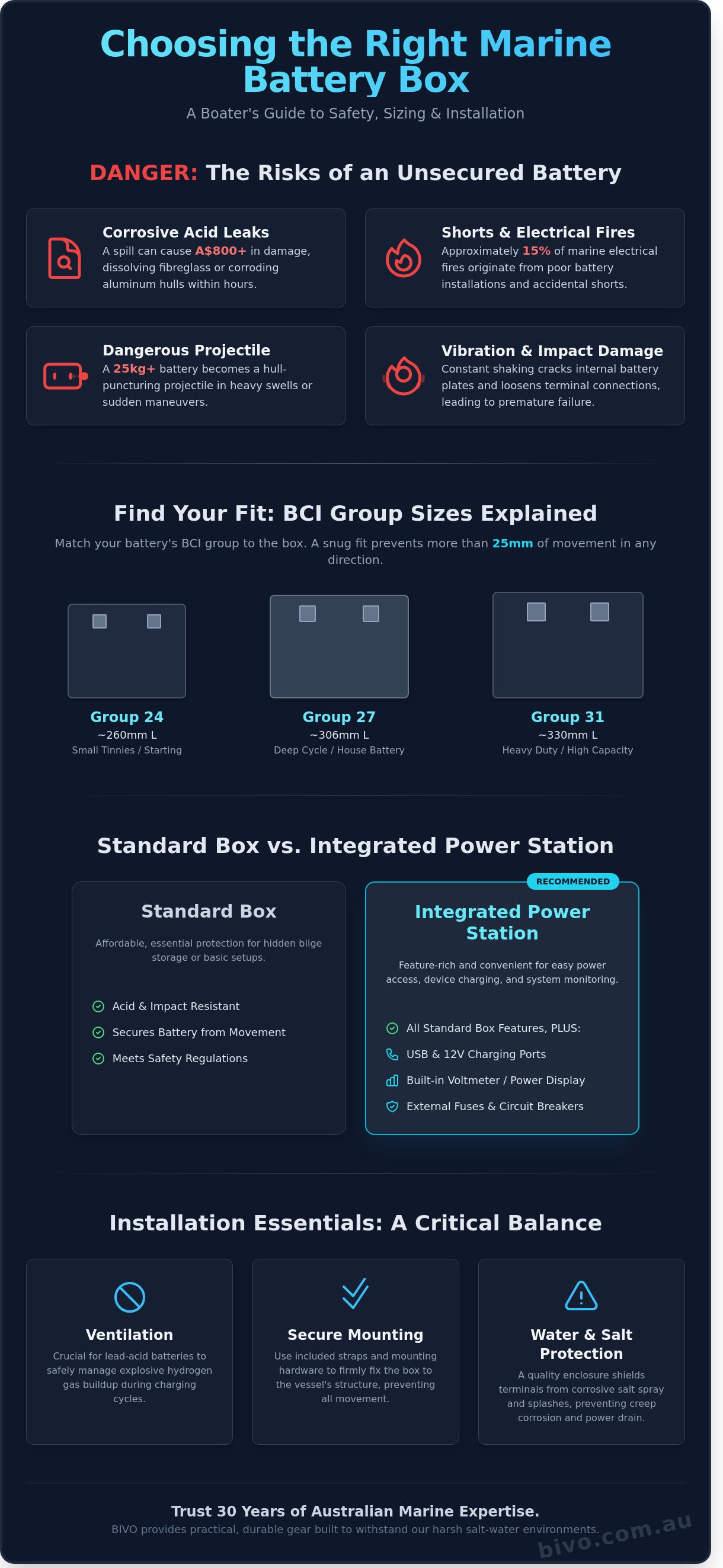
A standard marine battery often weighs 25kg or more. In heavy seas or during sudden maneuvers, an unsecured battery becomes a dangerous projectile. It can slide with enough force to puncture a hull or tear through wiring looms. Loose connections are another major risk. When a battery moves, cables strain and terminals spark. Data suggests that approximately 15% of marine electrical fires originate from poor battery installations. While some boaters rely on a simple strap, this is rarely sufficient. Choosing the right marine battery box provides a fixed, ventilated environment that keeps the power source stationary even in 3-meter swells.
Understanding Marine Battery Box Sizes and BCI Groups
BCI (Battery Council International) group numbers are the industry standard for determining a battery's physical dimensions. These codes tell you exactly what footprint your battery has. When choosing the right marine battery box, you must match the box size to the BCI group to ensure a snug fit. A loose battery is a significant safety hazard on the water. It can shift during heavy swells, potentially damaging terminals or the hull. Following ABYC installation standards ensures your battery remains stationary and secure, preventing more than 25mm of movement in any direction.
Always check the internal dimensions of the box rather than the external footprint. External measurements include the lid overhang and mounting brackets, which don't reflect the usable space. Measure your battery height from the base to the very top of the terminals. Standard boxes often fail to account for tall wing-nut terminals common in Australian marine setups. Our 30 years of industry experience shows that height is the most frequent cause of a poor fit.
The BCI Group Size Breakdown
Most Australian vessels utilize three primary sizes. Group 24 batteries are the standard for small tinnies and basic starting applications, measuring approximately 260mm in length. Group 27 serves as the middle ground for deep cycle house batteries, with a length of roughly 306mm. For large cruisers or dual-purpose setups requiring high capacity, Group 31 is the heavy-duty choice at approximately 330mm. Each size requires a specific box to prevent internal sliding and vibration damage.
Sizing for Lithium (LiFePO4) Batteries
Lithium batteries are changing how we kit out boats. They often have smaller footprints than traditional lead-acid equivalents of the same capacity. If you're retrofitting, you might need high-density foam filler blocks to keep a smaller lithium unit from sliding inside a standard Group 31 box. High-discharge lithium setups also require adequate air gap space for heat dissipation. Don't pack them too tightly. For those building custom banks, we offer durable battery storage solutions that accommodate these modern, compact dimensions. We're here to help you get the measurements right the first time.
Standard Boxes vs. Integrated Power Stations: Which is Better?
The decision between a basic enclosure and a feature-rich power station depends on your boat's electrical layout. A standard "dumb" box is a rugged, cost-effective solution for permanent installations. These are typically manufactured from acid-resistant polypropylene to prevent corrosion. If your battery sits in a hidden bilge or a dedicated locker, a standard box provides the necessary protection without unnecessary bulk. While Australian boaties focus on local conditions, many high-end manufacturers align their designs with U.S. Coast Guard battery installation regulations to ensure maximum safety regarding ventilation and secure mounting.
Integrated power stations serve a different purpose. These units feature lids equipped with 12V accessory sockets, USB ports, and external terminals. They effectively transform a standalone deep-cycle battery into a portable energy hub. This versatility is vital for 4.5-metre tinnies or inflatable boats where a permanent switch panel isn't practical. When choosing the right marine battery box, consider the value of built-in circuit breakers. A 15-amp breaker can save a A$1,500 chartplotter from a catastrophic short circuit. It's a small investment that protects your most expensive marine electronics.
When to Choose a Standard Heavy-Duty Box
Standard boxes are the reliable choice for dedicated starting batteries. You don't need external charging ports for an engine crank battery that stays tucked away. These boxes feature a lower profile, often measuring under 250mm in height, making them easier to fit under seats or inside small lockers. If you're configuring a 24V or 36V bank for a trolling motor, standard boxes are easier to link together in a compact footprint. They offer 100% reliability for 30 years because there are no electronic components to fail in a salt-air environment.
The Benefits of an Integrated Battery Center
An integrated center is the best option for weekenders who need "plug and play" power. The built-in LED voltmeter allows for instant monitoring of battery health; you'll know immediately if your voltage dips below the critical 12.2V mark. These units include external wing-nut terminals for fast connection of solar blankets or portable fridges. This setup eliminates the need for custom wiring, saving you roughly A$200 in professional installation costs. It's a practical, all-in-one solution that has become the industry standard for versatile deck-mounted power.
Installation Essentials: Ventilation, Mounting, and Waterproofing
Proper installation is as vital as choosing the right marine battery box for your vessel. A common mistake many boaties make is seeking a 100% airtight seal. While keeping salt spray out is necessary, a completely sealed box creates a dangerous pressure cooker for explosive gases. You need a setup that breathes while remaining weather-resistant.
Ventilation and Gas Management
Lead-acid batteries release hydrogen gas during the charging process. This gas is lighter than air and highly flammable. A concentration of just 4% hydrogen in a confined space creates an immediate explosion risk. Proper lid orientation allows for natural convection, letting gas escape through integrated vents. Always check that your gear, life jackets, or upholstery hasn't blocked these openings. In our 30 years of marine experience, we've found that blocked vents are a leading cause of avoidable battery failures and terminal corrosion.
Securing the Box to the Deck
A loose battery is a heavy projectile in rough Australian swells. A standard Group 27 battery weighs roughly 23kg; if it breaks loose, it can crack a hull or sever fuel lines. Secure your setup with these professional standards:
- Hardware: Use only 316-grade stainless steel fasteners. Zinc-plated screws will rust within months in a salt environment.
- Mounting: Through-bolt the brackets to the deck where possible. For fiberglass hulls, use heavy-duty screw-down brackets with a high-quality marine sealant in the pilot holes.
- Friction: Place a no-slip rubber mat under the box. This reduces vibration and prevents the plastic from sliding on wet gelcoat.
- Straps: Use heavy-duty nylon webbing with a stainless steel tensioning buckle. Avoid bungee cords. Check the strap tension every 3 to 4 offshore trips as nylon can stretch under load.
Cable management is your final line of defence. Saltwater travels up copper wiring through capillary action, which can destroy your electrical system from the inside out. Use heat shrink connectors at every entry point to create a permanent, corrosion-proof seal. This small step saves you hundreds of dollars in rewiring costs and prevents power drops when you're miles offshore. Choosing the right marine battery box only works if the connections inside stay bone dry.
Need to secure your onboard power? Browse our professional marine electrical range for reliable, trade-quality components.
Why BIVO is Australia's Trusted Choice for Marine Electrical
BIVO has spent over 30 years supplying the Australian marine and outdoor industry with reliable components. We understand that choosing the right marine battery box is about more than just finding a plastic container. It's about protecting your power source from the relentless salt-water environments found around the Australian coastline. Our team hand-picks every product to ensure it meets our strict standards for impact resistance and UV stability.
We operate directly from our Sydney warehouse to get gear into your hands quickly. We offer Fast & Free Delivery Australia Wide on eligible orders, ensuring you spend less time waiting and more time on the water. Our longevity in the market comes from a simple philosophy: we only sell what we'd trust on our own boats. Whether you're navigating the Hawkesbury or heading offshore, our curated range provides the peace of mind you need. We're here to offer expert advice on pairing your new setup with the right marine electrical supplies to keep your electronics running safely.
The BIVO Advantage for Trade and Retail
We support everyone from weekend boaties to professional boat builders. Marine sparkies can access wholesale pricing to keep their projects profitable and efficient. We don't just shift boxes; we conduct real-world testing on our entire inventory. This practical approach means we can help you get your 12V system right the first time. If you're unsure about fitment or cable routing, our experienced team provides the comprehensive support you expect from a 30-year industry veteran.
Complete Your Electrical Setup
A secure battery box is only the foundation of a reliable power system. To ensure your vessel stays powered in rough conditions, you should pair your box with our high-quality bus bars and fuse holders. These components manage high-current loads and protect your sensitive electronics from short circuits. Don't risk loose connections with cheap pliers. Our professional-grade ratchet crimp tools create the permanent, vibration-proof joins required for marine environments. We focus on quality and value for money so you can build a system that lasts for seasons, not just months.
Get Your Boat Ready for the 2026 Season
Protecting your vessel starts with a secure power source. Choosing the right marine battery box ensures your battery stays dry, ventilated, and firmly mounted against heavy swells. You must match BCI group sizes to your battery dimensions exactly to avoid dangerous shifting during transit. Whether you need a standard protective case or a full-featured integrated power station, your choice directly impacts the lifespan of your electrical system.
Bivo brings 30 years of industry experience to every product we stock. We've spent three decades testing gear against harsh Australian conditions, so you don't have to guess what works. We're trusted by Australian trade professionals who require no-nonsense reliability and genuine value for money. We provide fast and free delivery Australia wide to ensure your project stays on schedule and under budget.
Shop Heavy-Duty Marine Battery Boxes & Electrical Gear
Our team is here to help you find the perfect fit for your boat. We'll see you out on the water soon.
Frequently Asked Questions
Does a marine battery box need to be waterproof?
Most marine battery boxes aren't fully waterproof because they require ventilation to let hydrogen gas escape. While they protect against rain and salt spray, a completely sealed box could become a safety hazard during charging. Look for a box with a baffled vent design. This setup keeps water out of the battery terminals while allowing the unit to breathe safely in your engine bay.
What is the difference between a Group 24 and Group 27 battery box?
The main difference is the physical size of the internal compartment. A Group 24 box fits batteries up to 280mm long, while a Group 27 box accommodates larger batteries up to 306mm in length. Choosing the right marine battery box depends on these specific measurements. If the box is too large, your battery will slide around during transit, which can cause the casing to crack or terminals to snap.
How do I vent a battery box in a closed compartment?
You must install a dedicated vent hose that leads from the box to the exterior of the boat. Lead-acid batteries release explosive gases during the final 20% of their charge cycle. Use a 50mm diameter flexible hose attached to the top of the box and route it to a louvered vent on the hull. This prevents dangerous gas buildup in small storage lockers or under-seat compartments.
Can I use a plastic battery box for a Lithium LiFePO4 battery?
High-grade polypropylene boxes are perfect for LiFePO4 batteries because they offer excellent impact protection without the weight of metal. Since lithium batteries don't off-gas like lead-acid types, you don't need to worry about acid corrosion. A sturdy plastic box protects the internal Battery Management System from vibrations. Most 100Ah lithium units fit standard Group 27 boxes, making the upgrade simple and clean.
Why should I use a battery box instead of just a tray?
A battery box provides 360-degree protection that a simple tray cannot match. It prevents accidental short circuits if a metal tool drops across the terminals and contains any electrolyte spills that could damage your hull. We've seen 30 years of avoidable electrical failures that a simple A$35 plastic cover would've prevented. It keeps your connections dry and your bilge free from corrosive battery acid.
How do I secure a battery box to an aluminum boat deck?
Mount the box using four 6mm stainless steel bolts and large backing washers to distribute the weight. Use a nickel-based anti-seize lubricant on the threads to prevent galvanic corrosion between the steel fasteners and the aluminum deck. Thread a heavy-duty nylon strap through the integrated slots in the box base. This ensures your battery stays locked down even when you're hitting a heavy 30-knot chop.
What features should I look for in a 'smart' battery box?
Look for a box featuring a built-in 12V voltmeter, dual USB ports, and at least one 50A Anderson plug. These additions allow you to run accessories like fridges or fishfinders without opening the lid. Choosing the right marine battery box with an integrated 60A circuit breaker adds a vital layer of safety. Premium models also include external terminals, so you can charge the battery without removing the cover.
Are battery boxes required by law in Australia?
Australian standards like AS/NZS 3004.2 require all batteries to be securely fastened and their terminals protected. The law states a battery must not move more than 25mm when subjected to a force double its own weight. Using a compliant battery box is the easiest way to meet these safety regulations. Failing to secure your battery correctly can lead to hefty fines or rejected insurance claims after an incident.