

Choosing the right water ski ropes and bridles can feel complicated. With different materials for skiing, wakeboarding, and tubing, it's easy to feel unsure. Add the question of which bridle you need for an outboard motor, and the risk of buying low-quality, unsafe equipment becomes a real concern for any boat owner.
A great day on the water starts with the right connection to your boat. With over 30 years in the Australian marine industry, we believe that knowledge is key to safety and performance. We're here to help you make the right choice with practical, straightforward advice that cuts through the confusion.
This guide will teach you how to identify quality materials, understand the difference between high-stretch and low-stretch ropes, and confidently match your gear to your boat and sport. You'll gain the confidence to purchase durable equipment that ensures safety, maximises fun, and delivers real value for money for seasons to come.
Key Takeaways
- Match your rope directly to your water sport. The ideal material and length differ significantly for slalom skiing, wakeboarding, and tubing.
- A ski bridle is essential for boats with outboard motors. It protects your rope from propeller damage and ensures a safer, more balanced pull for the skier.
- A simple pre-session inspection dramatically increases safety. Learn the key signs of wear and tear to look for before every trip on the water.
- Get the best value and performance by choosing the right water ski ropes and bridles from the start. Quality materials from a trusted Australian supplier ensure durability and safety.
Understanding the Fundamentals: Ski Rope vs. Ski Bridle
To get the most out of your time on the water, you need the right gear. Since the early days in the history of water skiing, equipment has evolved for performance and safety. When it comes to water ski ropes and bridles, understanding the difference is crucial. Think of it this way: the bridle creates the correct tow point, and the rope is your lifeline. With over 30 years in the industry, we know that a proper setup prevents poor handling, equipment damage, and unnecessary risk.
What is a Water Ski Rope?
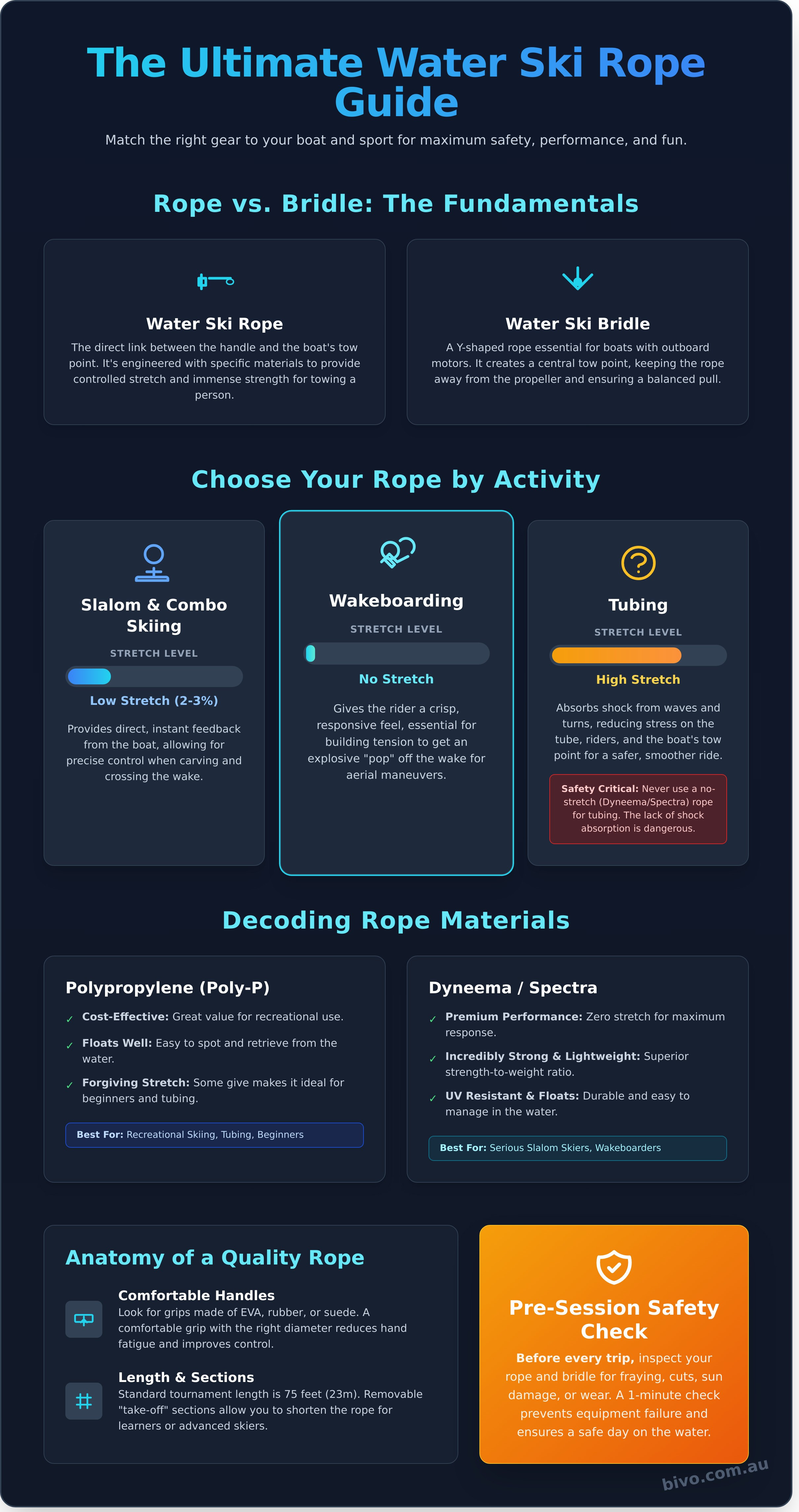
A water ski rope is the direct link between the handle and the boat's tow point. It is not just any line; it's engineered with specific materials like polypropylene to provide controlled stretch and immense strength. A complete ski rope includes the handle, which varies in grip diameter, material, and shape to suit different activities, from recreational skiing to competitive slalom. The rope's length is also a key factor, often sectioned to allow for adjustments.
What is a Water Ski Bridle (or Harness)?
A ski bridle is a Y-shaped rope that attaches to two transom eyes on a boat’s stern, creating a central, balanced tow point. It is essential for boats with outboard or sterndrive motors, as it keeps the tow rope clear of the engine and propeller. Many bridles feature a self-centring pulley that allows the ski rope to travel smoothly from side to side as the skier cuts across the wake, ensuring a consistent and stable pull.
Why You Can't Just Use Any Rope
Using a generic rope from a hardware store is a serious safety hazard. These ropes are not rated for the sudden, high-tensile loads of towing a skier and can snap without warning, potentially causing severe injury. Purpose-built water ski ropes and bridles are designed to float, a critical feature that prevents them from sinking and tangling in the propeller. Investing in quality, specialised equipment is a non-negotiable part of safe boating.
How to Choose the Perfect Water Ski Rope
Selecting the right equipment is the first step to a great day on the water. When it comes to water ski ropes and bridles, the most important question is: what activity are you doing? A rope designed for slalom skiing performs very differently from one made for tubing. Using the correct rope ensures better performance and, most importantly, safety.
Ropes by Activity: Slalom, Wakeboard, and Tubing
Each water sport demands specific rope characteristics. Using the wrong type compromises both control and safety.
- Slalom & Combo Ski Ropes: These ropes have minimal stretch (around 2-3%). This provides the skier with direct, instant feedback from the boat for precise control when carving and crossing the wake.
- Wakeboard Ropes: Built with no-stretch materials like Dyneema, these ropes give the rider a crisp, responsive feel. This is essential for building tension and achieving an explosive "pop" off the wake for aerial manoeuvres.
- Tube Ropes: Safety is the priority here. Tube ropes are built with a higher strength rating to handle multiple riders. They have some stretch to absorb shock, reducing stress on the tube and the boat's tow point. Using a no-stretch rope for tubing is dangerous, a key point covered in Australian water skiing safety regulations.
Decoding Rope Materials: Polypropylene vs. Dyneema
The material of your rope affects its performance, lifespan, and price. For Australian conditions, always look for a rope with high UV resistance to ensure longevity and safety.
- Polypropylene (Poly-P): This is a common, cost-effective choice for recreational skiing. Poly-P ropes float well, making them easy to spot in the water, and have some stretch that is forgiving for beginners.
- Dyneema/Spectra: These are premium, no-stretch fibres. They are incredibly strong, lightweight, and also float. This is the material of choice for serious slalom skiers and wakeboarders who demand maximum performance.
Understanding Handles, Length, and Sections
The final details make a significant difference in comfort and control on the water.
- Handle Grips: Look for materials like EVA, rubber, or suede. A comfortable grip with the right diameter reduces hand fatigue and improves your control.
- Rope Length & Sections: The standard length for a tournament ski rope is 75 feet (23 metres). Many quality water ski ropes and bridles come with removable sections, or take-off loops. This allows you to shorten the rope, which is ideal for helping learners get up or for advanced skiers wanting to change where they cross the wake.
With over 30 years of experience, we provide equipment that delivers value and performance. Browse our range of high-quality ski ropes.
Selecting the Right Ski Bridle for Your Boat
Choosing the correct ski bridle is not about preference; it is determined by your boat's engine and transom design. The most important factor is creating a safe, central tow point that keeps your rope clear of moving parts. Understanding your setup is the first step in selecting the right equipment from our range of high-quality water ski ropes and bridles.
Outboard Motor Bridles: The Essential Safety Component
If your boat has an outboard motor, a V-shaped bridle is non-negotiable. It attaches to the two stern eyes on either side of your transom, creating a tow point in the centre, well behind the engine. This design is critical for keeping the tow rope away from the propeller, preventing dangerous tangles and costly damage. Look for models with a high-visibility float to keep the bridle on the surface and out of your prop wash when idle. Find the perfect outboard motor bridle for your boat.
Tow Harnesses for Inboard Pylons and Towers
Boats equipped with a central ski pylon or a wakeboard tower typically do not require a stern bridle for towing. The tow point is already high and centred. However, a tow harness can still be a valuable addition. It helps protect your boat's gelcoat and upholstery from rope rub during sharp turns. For wakeboarding, a tower provides a higher tow point, which helps riders get more air and perform tricks more easily.
Key Bridle Features: Pulleys, Floats, and Hardware
When comparing bridles, pay close attention to the components. Quality hardware ensures performance and longevity.
- Self-Centering Pulley: A pulley system allows the tow rope to follow the skier or tuber smoothly from one side of the wake to the other. This provides a more consistent pull and a better experience for the rider.
- Heavy-Duty Clips/Hooks: Your bridle is only as strong as its connection points. Insist on corrosion-resistant, heavy-duty hardware for a secure attachment to your boat. Adhering to high standards, like those advocated by governing bodies such as USA Water Ski & Wake Sports, is vital for safety on the water.
- Material Strength: Check the bridle's load rating. A standard bridle is rated for one or two riders, but for larger tubes or multiple skiers, you will need a heavy-duty model designed to handle the increased strain.
Essential Safety and Maintenance for Your Tow Gear
Your water ski rope and bridle are your direct link to the boat. Proper care is not just about getting more seasons out of your gear; it's a critical safety practice. A well-maintained rope performs reliably, while a neglected one can fail at the worst possible moment. A few minutes of inspection and care before and after each session will dramatically increase the lifespan and safety of your equipment.
Your Pre-Ski Safety Inspection Checklist
Before you hit the water, run through this quick check. It takes less than a minute and is the best way to prevent gear failure and ensure a safe day for everyone.
- Rope Length: Run your hands along the entire rope, feeling for any fraying, cuts, or significant abrasions. Pay close attention to the areas near the handle and the boat connection.
- Handle: Inspect the handle for any cracks in the bar or end caps. Check that the grip is secure and not deteriorating or becoming sticky.
- Bridle Hardware: Examine the bridle pulley and clips for signs of excessive wear, rust, or corrosion. Ensure any moving parts operate smoothly.
- Floats: Squeeze the floats on your bridle and rope. They should be firm. If they feel waterlogged or compressed, they won't work effectively.
Proper Cleaning and Storage to Maximise Lifespan
Salt, sun, and moisture are the biggest enemies of your tow gear. Follow these simple steps after every use to ensure you get maximum value and performance from your water ski ropes and bridles.
- Rinse Thoroughly: Always rinse your gear with fresh water, especially after boating in salt water. This removes corrosive salt and abrasive minerals.
- Air Dry Completely: Hang your rope and bridle in a shaded, well-ventilated area to dry. Never store a rope while it's damp, as this promotes mildew and fibre decay.
- Store Smart: Keep your equipment coiled loosely in a dry place away from direct sunlight, extreme heat, and chemicals like fuel or battery acid. UV degradation is a primary cause of rope failure.
Know When to Retire Your Gear
Even the highest quality gear has a finite lifespan. Using a rope past its prime is a significant safety risk. Replace your gear immediately if you notice any of these warning signs:
- Visible Wear: Significant fraying, excessive fading from sun exposure, or heavy discolouration are clear red flags that the material is compromised.
- Knots: A knot in a tow rope can reduce its breaking strength by up to 50%. If a knot has been pulled tight, the rope must be replaced.
- Stiffness or Brittleness: If the rope feels stiff, brittle, or makes a crackling sound when flexed, its internal fibres have degraded. It's time for a new one.
If your inspection reveals it's time for an upgrade, you can trust our 30 years of industry experience. Browse our range of quality water ski ropes and bridles to ensure your safety on the water.
Why Quality Matters: Choosing a Trusted Australian Supplier
When gearing up for a day on the water, it's easy to focus on the boat and the skis. But your tow rope is a critical piece of safety equipment-it’s the essential link between the skier and the vessel. This is not the place to cut corners. Choosing a high-quality rope from a trusted Australian supplier ensures safety, performance, and durability for seasons to come.
The Link Between Quality Materials and On-Water Safety
The forces exerted on a tow rope during a deep water start or a sharp cut are immense. Low-quality materials can stretch inconsistently, fray, or snap without warning, creating a dangerous situation. Our ropes are constructed from high-grade, low-stretch fibres designed to withstand these loads. Properly spliced connections and robust handles mean you can trust your gear won't fail when you need it most. Investing in quality provides peace of mind, letting you focus on the fun.
The BIVO Advantage: Experience and Value
With over 30 years in the marine industry, we’ve seen what works and what doesn’t. BIVO doesn't stock every brand; we stock the right brands. Our focus is on providing high-value-for-money equipment that delivers reliable performance season after season. We stand behind our curated range of water ski ropes and bridles. If you're unsure what you need, our experienced team can provide practical, straightforward advice to match your boat, skill level, and budget. We're here to help you make a smart investment.
Get Geared Up with Fast, Free Australian Delivery
Getting the right gear shouldn't be a hassle. We dispatch orders daily from our Sydney warehouse to ensure a rapid turnaround. All customers benefit from our fast and free delivery service across Australia, getting you on the water sooner. No long waits and no surprise shipping costs. When you choose BIVO, you benefit from:
- Expert advice from an experienced team.
- High-quality, reliable equipment.
- Fast and free delivery direct to your door.
Don't compromise on the gear that keeps you safe. By choosing a reputable supplier, you get more than just a product; you get the assurance of quality, expert support, and fast, reliable service. Explore our complete range of dependable water ski ropes and bridles and experience the BIVO difference.
Equip Yourself for the Perfect Pull
Mastering your time on the water starts with the right equipment. As we've covered, understanding the distinct roles of a ski rope and a bridle is your first step toward a better setup. Selecting the correct rope length and material for your skill level enhances performance, while the right bridle ensures a balanced, consistent pull and protects your boat. Finally, never underestimate the importance of safety and maintenance; proper care ensures your gear is reliable every time you launch.
Investing in high-quality water ski ropes and bridles from a trusted Australian supplier is the best way to guarantee performance and durability. With over 30 years of industry experience, BIVO has become the go-to source for skiers and boaters across the country, serving retail, trade, and wholesale customers with expert advice and premium products.
Ready to feel the difference quality gear makes? Shop our expert-selected range of water ski ropes and bridles. We offer Fast & Free Delivery Australia Wide, so you can gear up for your best season yet.
Frequently Asked Questions About Water Ski Ropes & Bridles
Can I use a wakeboard rope for water skiing?
No, it is not recommended. Wakeboard ropes have very little stretch to help the rider get 'pop' off the wake. Water ski ropes are designed with some stretch to absorb shock as the skier cuts through the water. Using a wakeboard rope for skiing creates a jarring pull that is uncomfortable and can increase the risk of injury. Always use a rope designed specifically for the sport.
How long should a water ski rope be for a beginner?
For beginners, a standard 75-foot (or 23-metre) rope is the ideal length. This distance places the skier in a wide, clean part of the wake, making it easier to get up and maintain balance. Shorter ropes create a narrower, more turbulent wake that is difficult for new skiers to cross. Stick with the 75-foot standard until you have built confidence and skill on the water.
What is the difference between a combo ski rope and a slalom ski rope?
A combo ski rope is a basic, single-section rope designed for recreational skiing on two skis, making it perfect for beginners and family use. A slalom ski rope is more advanced, featuring multiple, colour-coded removable sections. This allows competitive skiers to shorten the rope to specific, regulated lengths for navigating a slalom course. Slalom ropes offer more performance, while combo ropes offer simplicity and value.
How do I attach a bridle to my outboard boat?
Attach the bridle's two hooks to the transom eyes on either side of your outboard motor. Ensure the rope passes clearly over the top of the engine. The float on the bridle will keep it on the surface and away from the propeller. Once the bridle is secure, connect your main ski rope to the pulley or loop at its centre. This setup provides a stable, central pulling point for the skier.
How often should I replace my water ski rope?
Inspect your rope before each use rather than relying on a strict timeline. Replace it immediately if you see significant fraying, sun damage (fading or stiffness), or mould. For an average recreational user, replacing your gear every 3-5 seasons is a good rule of thumb. However, consistent visual inspection is the most reliable guide for all high-quality water ski ropes and bridles, ensuring safety on the water.
Is a more expensive water ski rope really better?
Yes, for a performance skier, a more expensive rope is significantly better. Premium ropes use materials with less stretch, providing a more direct and responsive connection to the boat. This is crucial for high-level slalom skiing. They also offer greater durability and tournament-grade accuracy in their section lengths. For casual family fun, a quality mid-range rope provides excellent value and performance without the higher cost. Choose based on your skill level.
What's the best way to store my ski rope to prevent tangles?
To prevent tangles and prolong its life, rinse the rope with fresh water and let it dry completely out of direct sunlight. Loosely coil the rope in a large loop or use a figure-eight wrap, then secure it with a rope keeper. Never wrap it tightly around a cleat or store it wet in a compartment, as this can cause kinks, mildew, and premature degradation of the material.